
The challenge
Encode and personalise RFID tickets on reels, reduce waiting and support more formats while maintaining product control.
Special-purpose machines · Process improvement
RFID encoding, double-sided personalisation with inkjet printheads, vision inspection and rewinding. An all-electric machine bringing together the experience gained across the CCPB2, CCPB3, CCPB4, CCPB5, CCPB6 and CCPB7 series and its improvements in production.
Explore the project ↓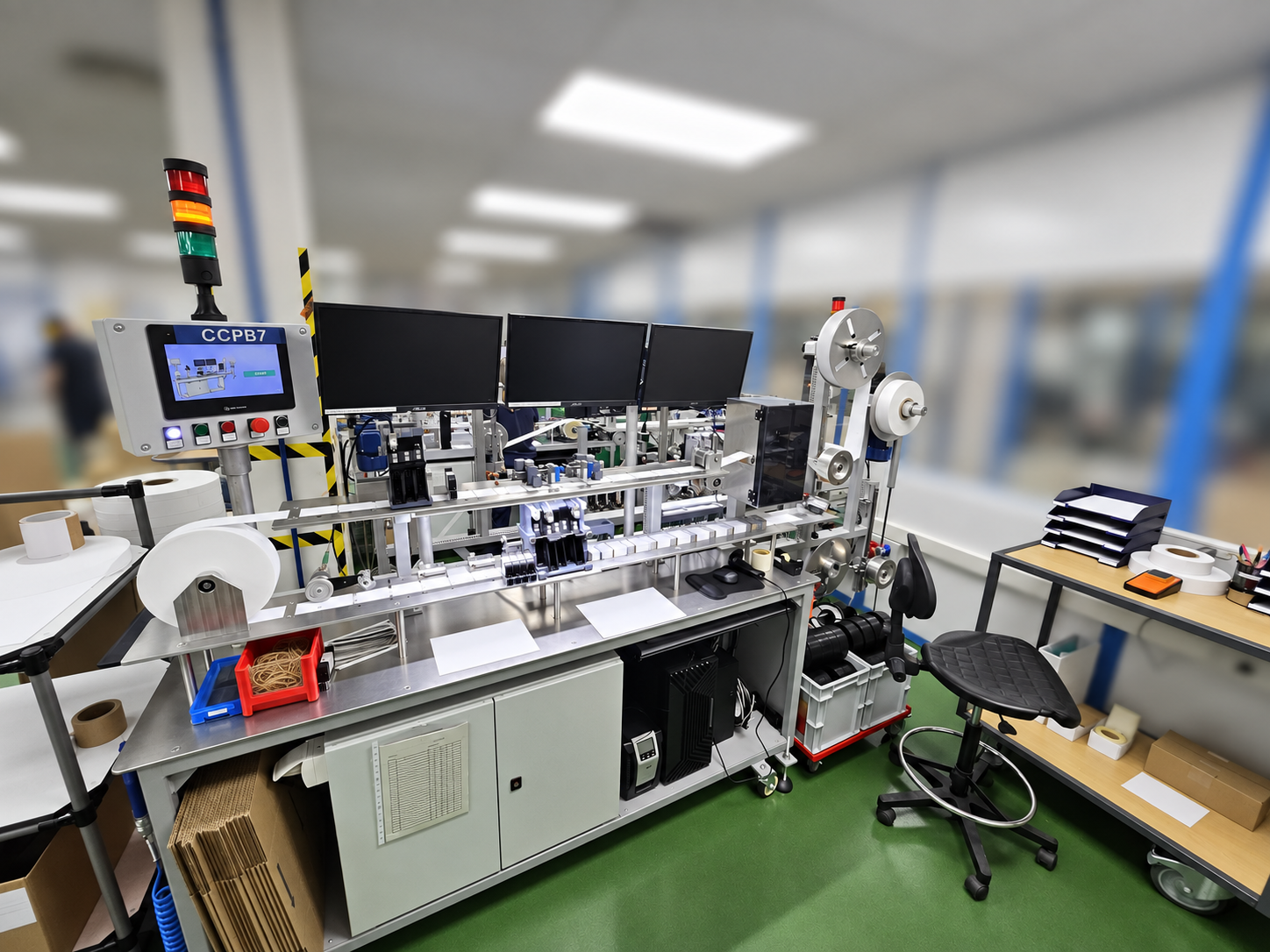
Six machines. Continuous development.
Encoding retries prolonged the cycle.
Ten stations working simultaneously.
Per machine, in an eight-hour shift.
Checking the product as throughput increases.
1,000-ticket reels · output per machine in 8-hour shifts.
Encode and personalise RFID tickets on reels, reduce waiting and support more formats while maintaining product control.
A complete machine: mechanics, manufacturing, electrical systems, automation and the integration of encoding, inkjet printing and vision.
A series developed from CCPB2 to CCPB7: six machines that bring together production experience and allow improvements to be extended to existing equipment.
The CCPB family was created to improve an RFID ticket encoding and personalisation process that the customer performed on a slow, vertically arranged machine. The development covers CCPB2, CCPB3, CCPB4, CCPB5, CCPB6 and CCPB7. Improvements were introduced on each machine as new jobs, formats and production requirements emerged.
CCPB7 brings that experience together in a complete machine. As well as feeding, transporting and collecting the web, it coordinates RFID encoding, double-sided personalisation and product inspection. Each operation has different requirements for positioning, waiting, movement and control.
The project covers mechanical design, construction, electrical systems, automation and system integration. Its evolution combines performance improvements with changes that broaden the jobs the machine can handle and make operators' work easier.
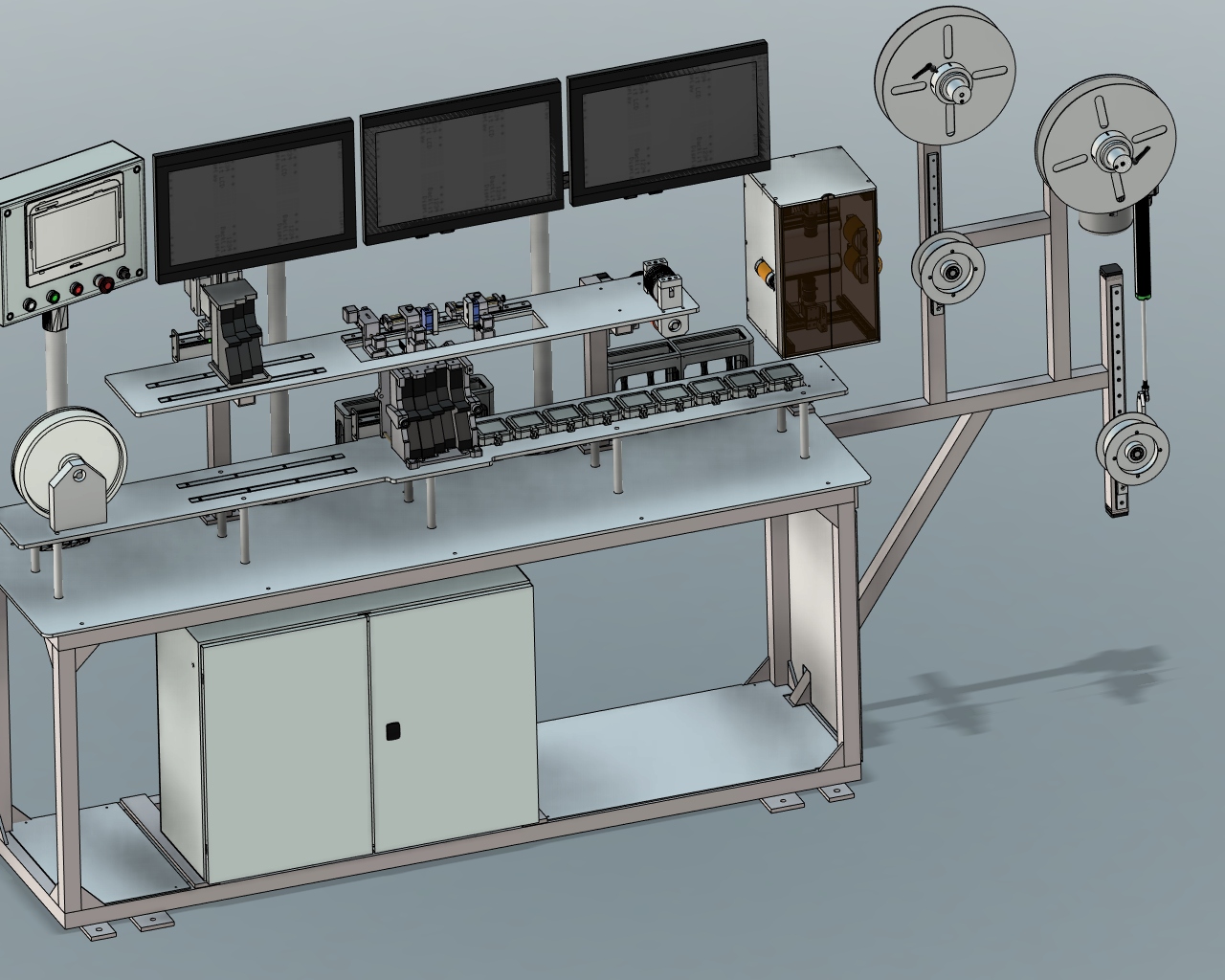
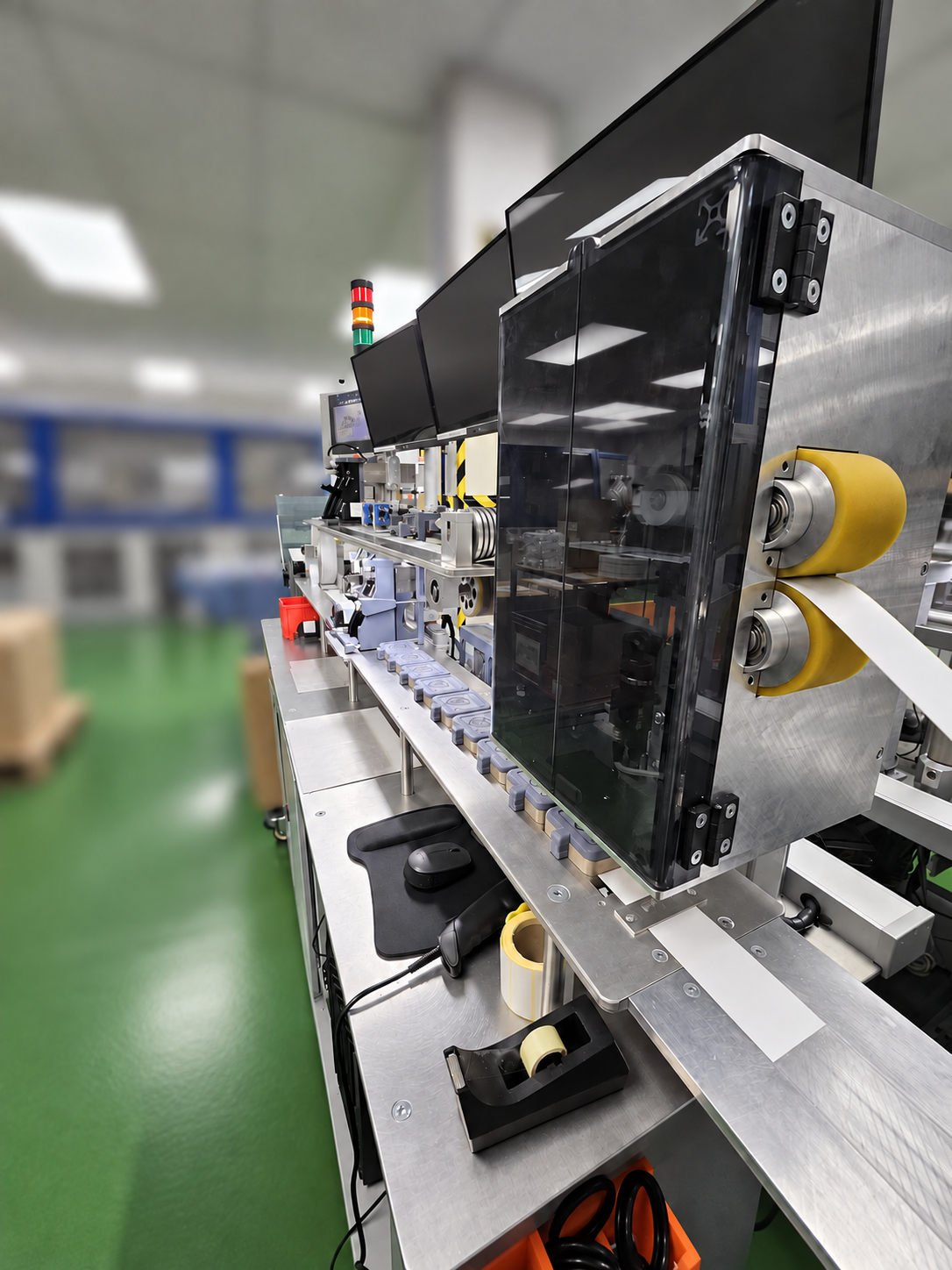
The web leaves the unwinder, passes through the encoding station and reaches the first bank of inkjet printheads. A turnover wheel presents the other side to the second bank. The product then passes through vision inspection and is collected on a reel again.
During normal production, the web advances in groups of ten tickets. The machine waits for confirmation that the group has been encoded. This waiting time can vary by job because the encoding software may also perform checks against external systems.
The inkjet printheads personalise each ticket while the web is moving. Coordinating waiting, advance and printing is part of the machine's operation. The entire machine is electric and needs no compressed air.
Explore CCPB7
Rotate the assembly, adjust the inkjet printheads, open the boxes and doors, and start the web transport.
In the early configurations, the proximity of the encoding stations caused interference. The software had to repeat operations and the machine waited for the group to finish encoding. This limited throughput even though the transport was ready to advance.
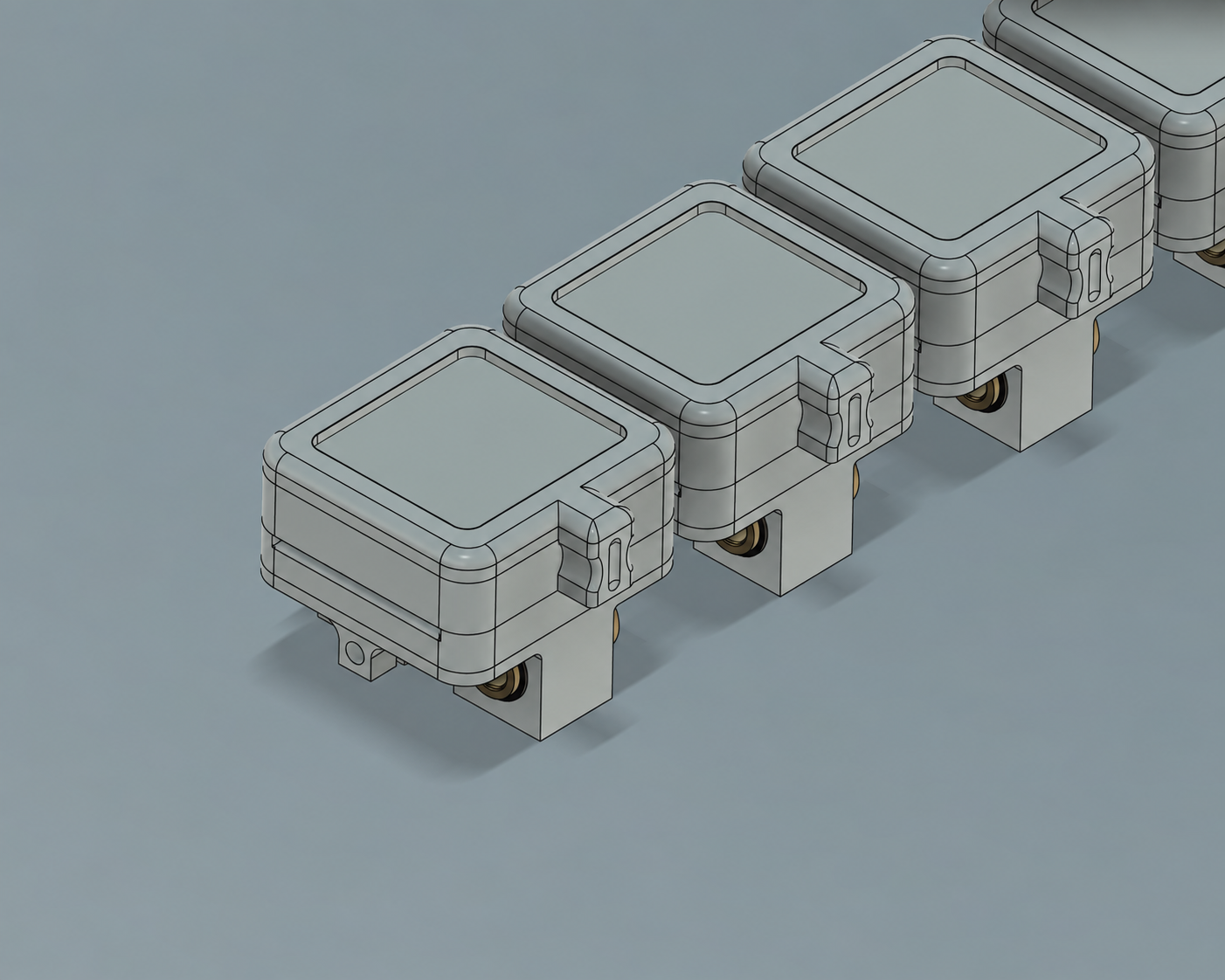
Developing a custom shielding system between stations made it possible to encode ten tickets simultaneously and reduce the retries that prolonged the cycle. The improvement was introduced on CCPB5 and later extended to other machines in the series.
For the reference job, output rose from 11–12 to 25–27 reels per machine in eight-hour shifts after the shielding boxes were added. At 1,000 tickets per reel, that means 13,000–16,000 additional tickets per machine and shift: more than double the output, an increase of between 108% and 145%.
Using 26 reels per shift as a reference, the average time per 1,000-ticket reel is approximately 18 minutes and 28 seconds. With the previous output of 11–12 reels, the average was around 40–44 minutes. Both figures are calculated over a full eight-hour shift, including reel changes and stops.
+108–145 %+13,000–16,000 tickets per machine and shift
Reels per machine · 8-hour shift · 1,000 tickets per reel.
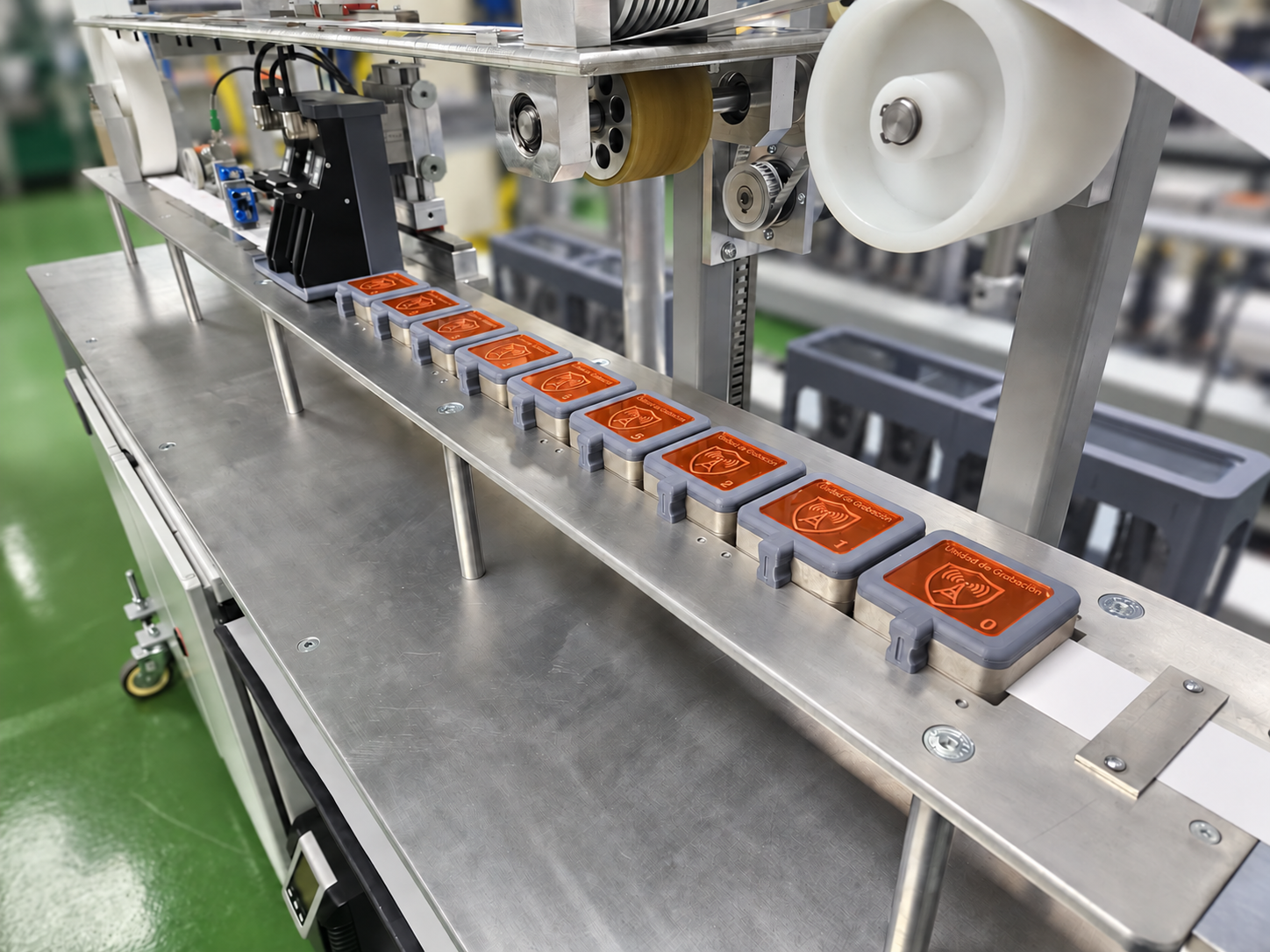
New jobs also brought differences in the spacing between tickets. An assembly designed for a fixed pitch no longer aligned correctly when the product changed. The adjustment had to keep the stations aligned with the web throughout the encoding area.
CCPB7 incorporates a custom box-positioning system. The operator selects the format on the HMI and the assembly adjusts to the supported configurations. This allows both the usual format and tickets separated by small connecting bridges to be processed.
Adapting the RFID area required a review of its relationship with the printing assemblies. The project evolved as a whole: when a station's footprint changed, nearby components were also reviewed to keep the machine compact. Inkjet printhead adjustments remain manual.
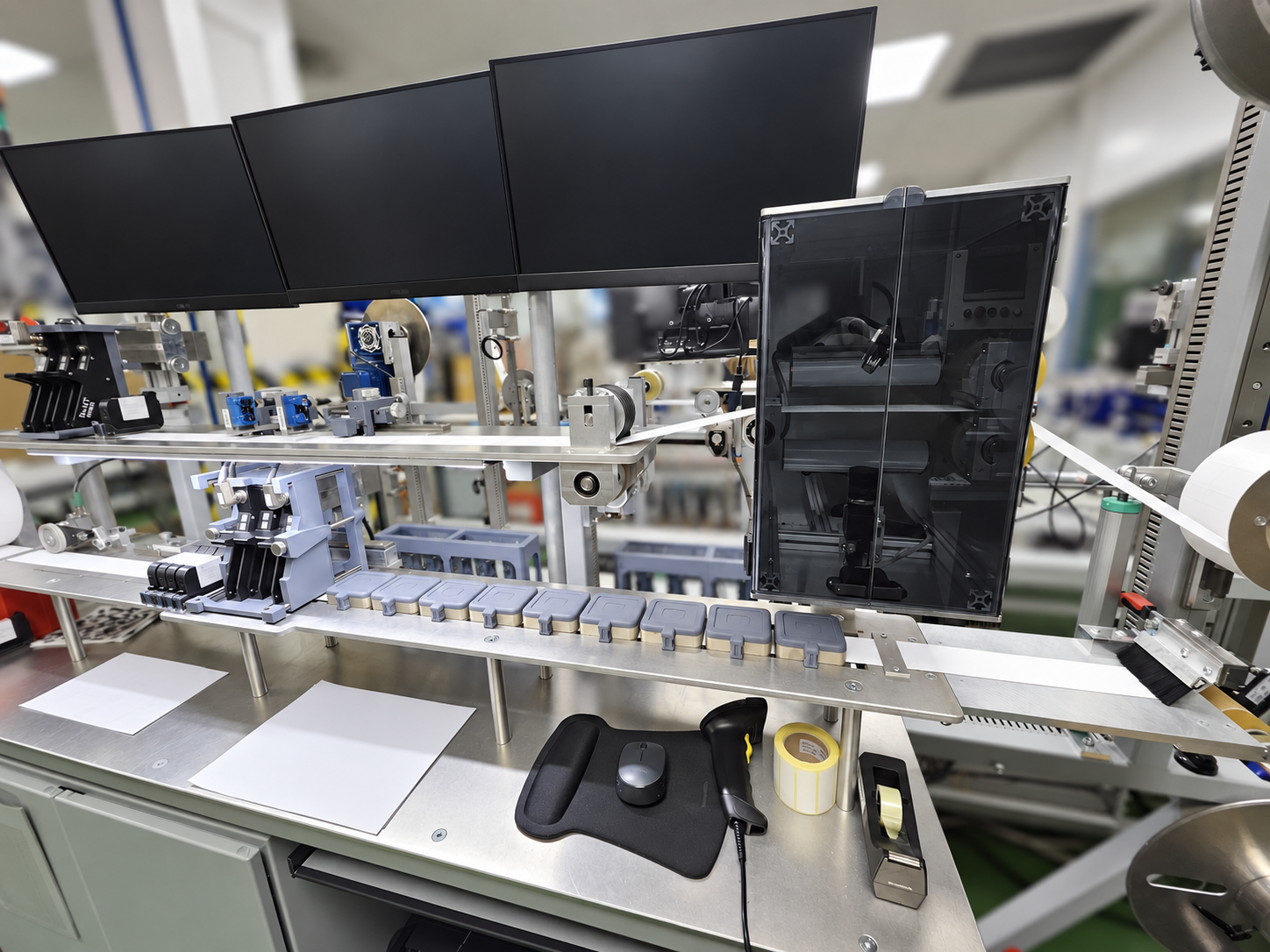
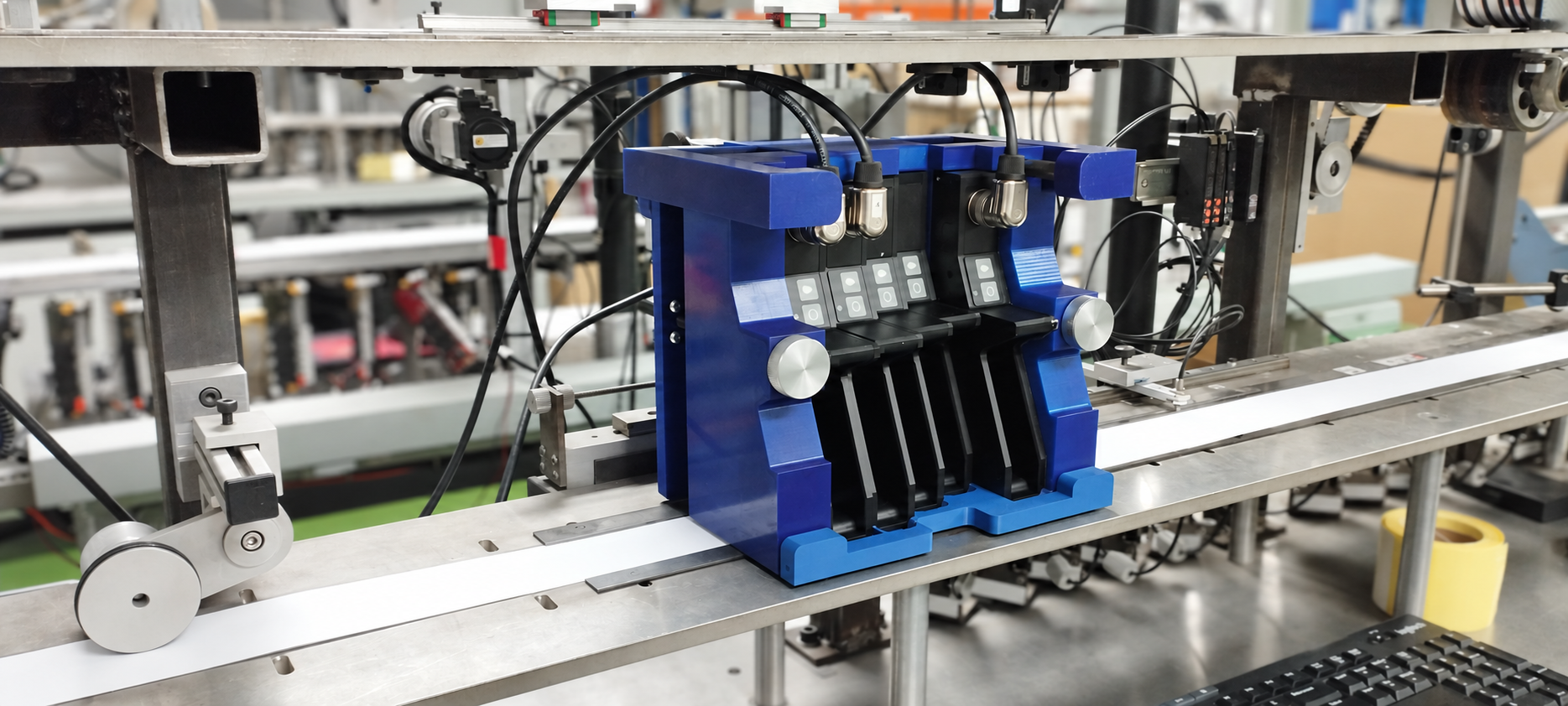
Personalisation initially used three fixed inkjet printheads per side. New messages needed to cover more of the ticket: the commercial mount no longer met the requirement, so a custom mount was designed for five fixed printheads per side.
The next requirement was to vary message positions. The design moved to three fixed central printheads and two independently adjustable outer heads, allowing personalisation across different areas of the ticket width. A later development made the mount more compact to fit alongside CCPB7's adjustable encoding boxes.
Position references allow known settings to be restored when changing jobs. Operators keep their configurations and reapply them on later runs. Once the job is set up, the machine maintains that adjustment throughout long production runs.
Inkjet printheads, routinely replaced due to intensive use, can be changed without losing their position. Separating consumable replacement from adjustment helps maintain the print configuration during production.
Evolution of inkjet printing
Initial configuration
Greater coverage
Outer head adjustment
Integration into CCPB7
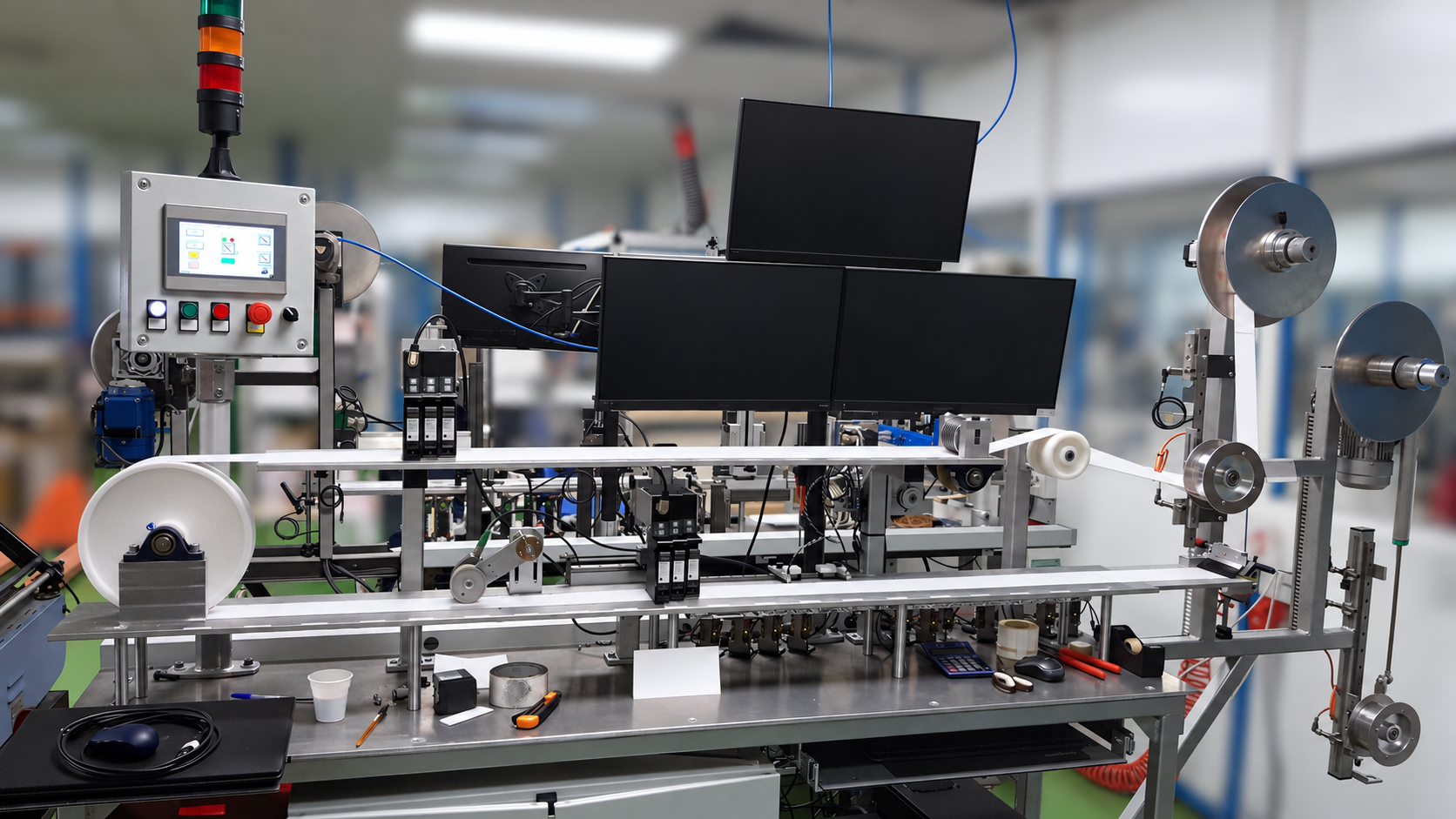
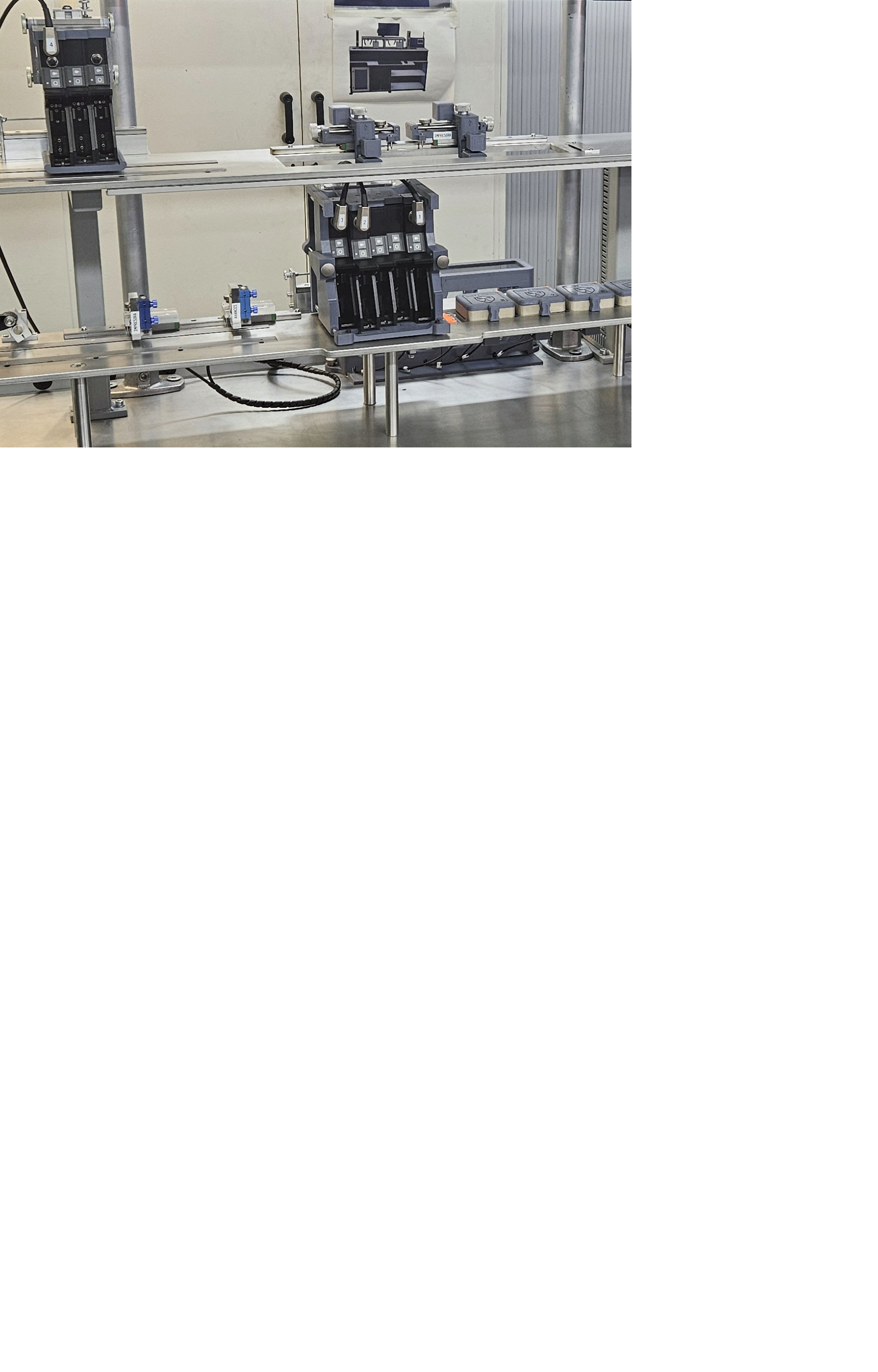
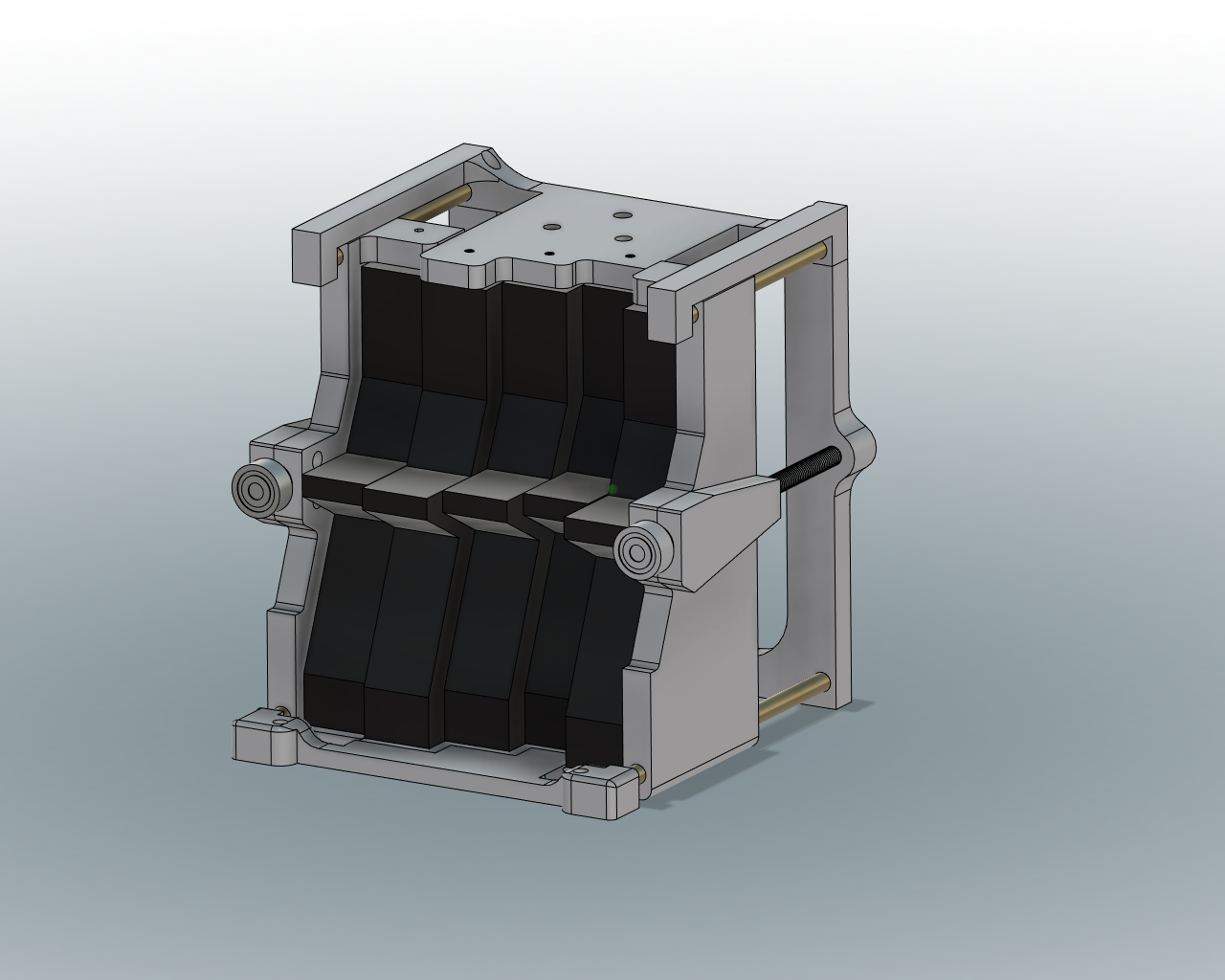
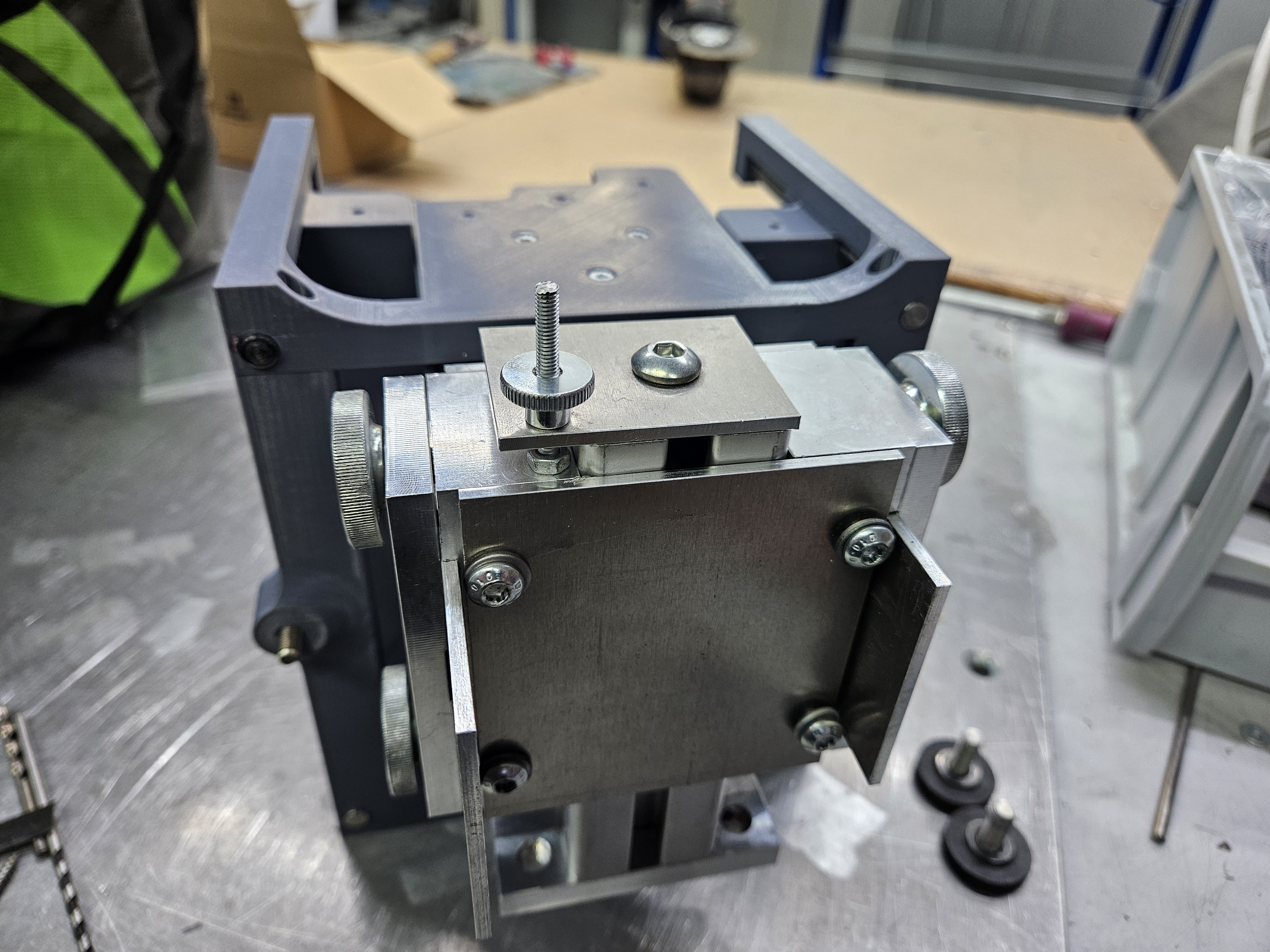
Earlier versions used printed references to determine the print start and advance point. Tickets without that mark introduced a new challenge: the available reference was the shape of the product's edge, which was too small for the system previously used.
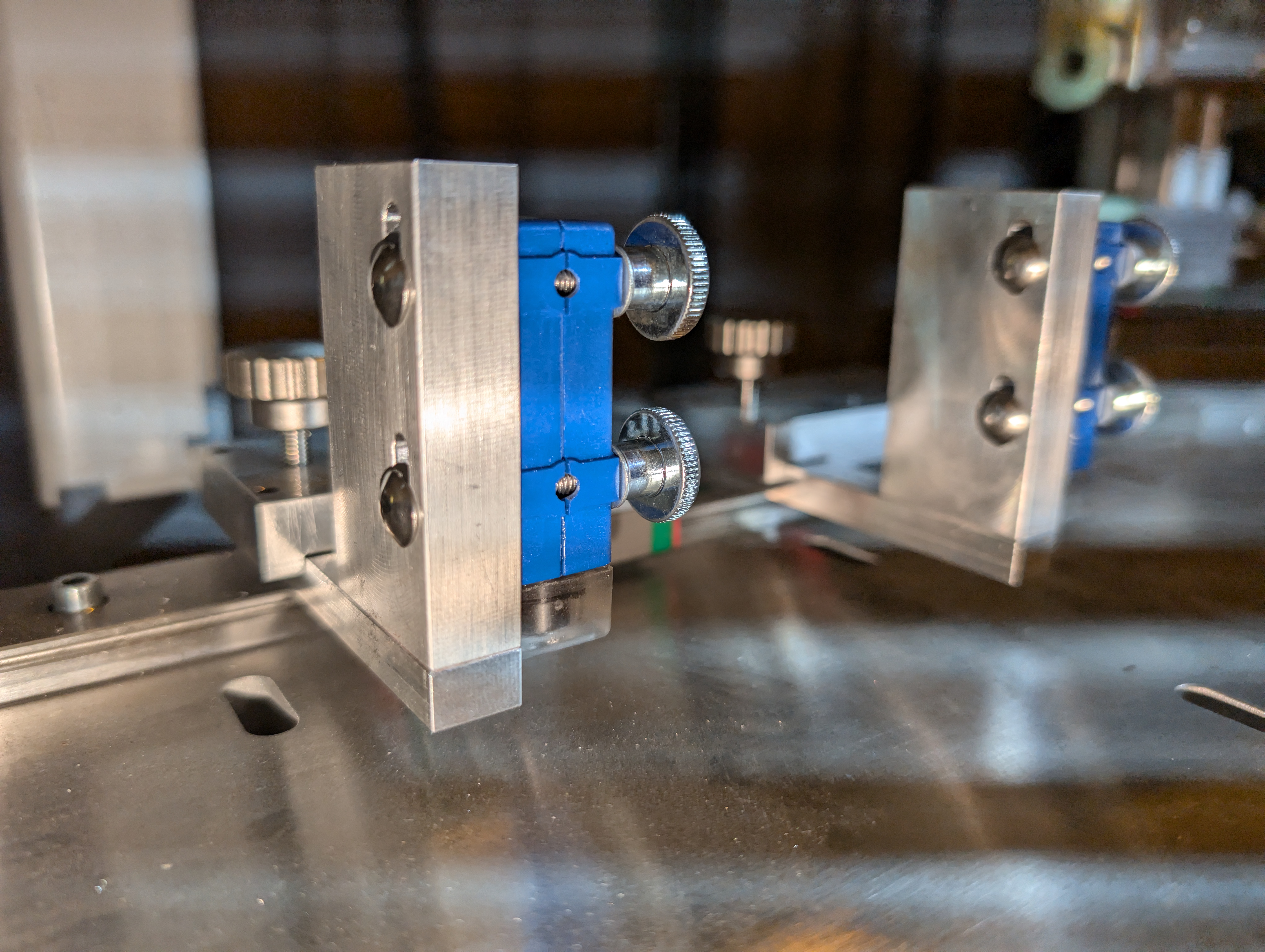
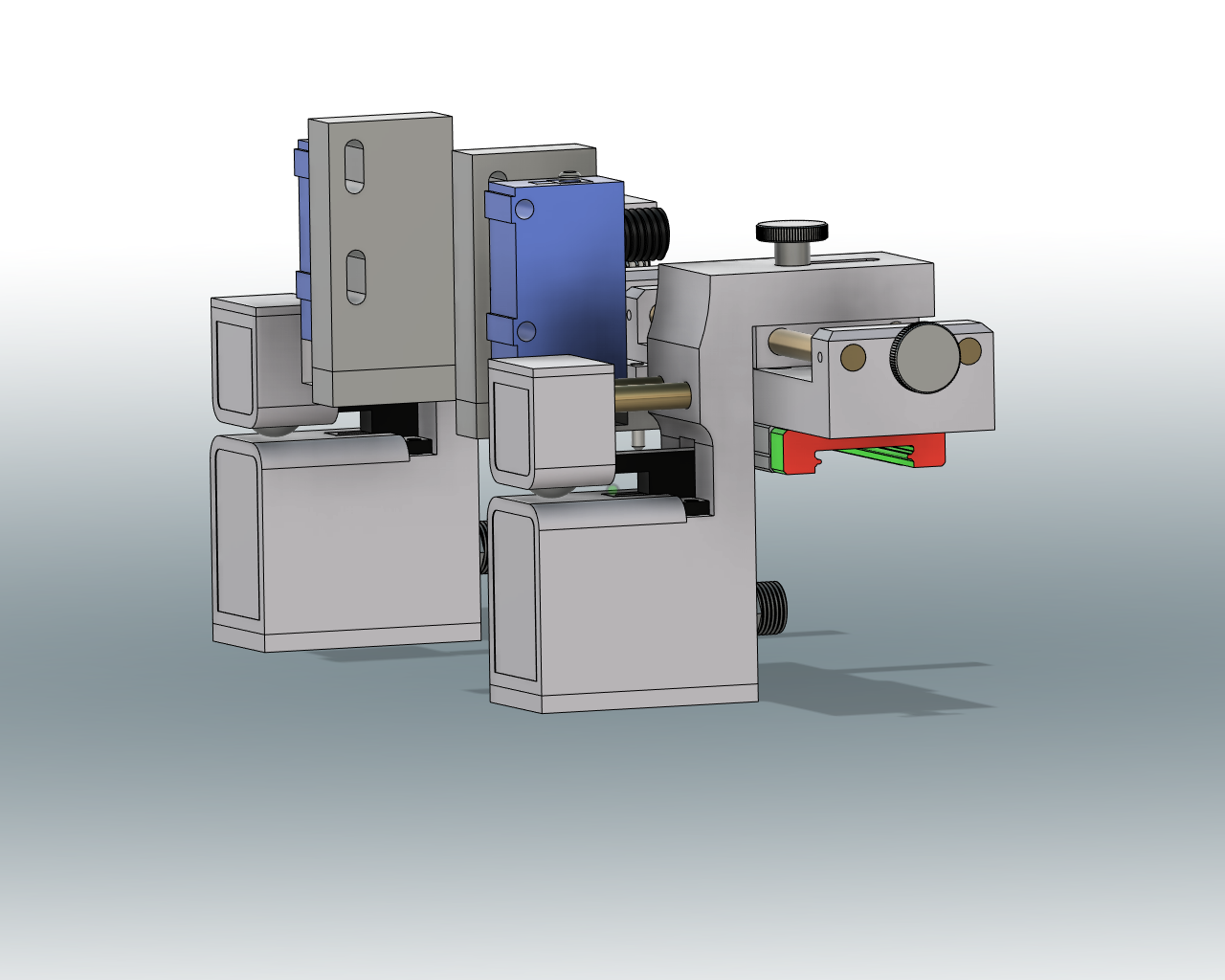
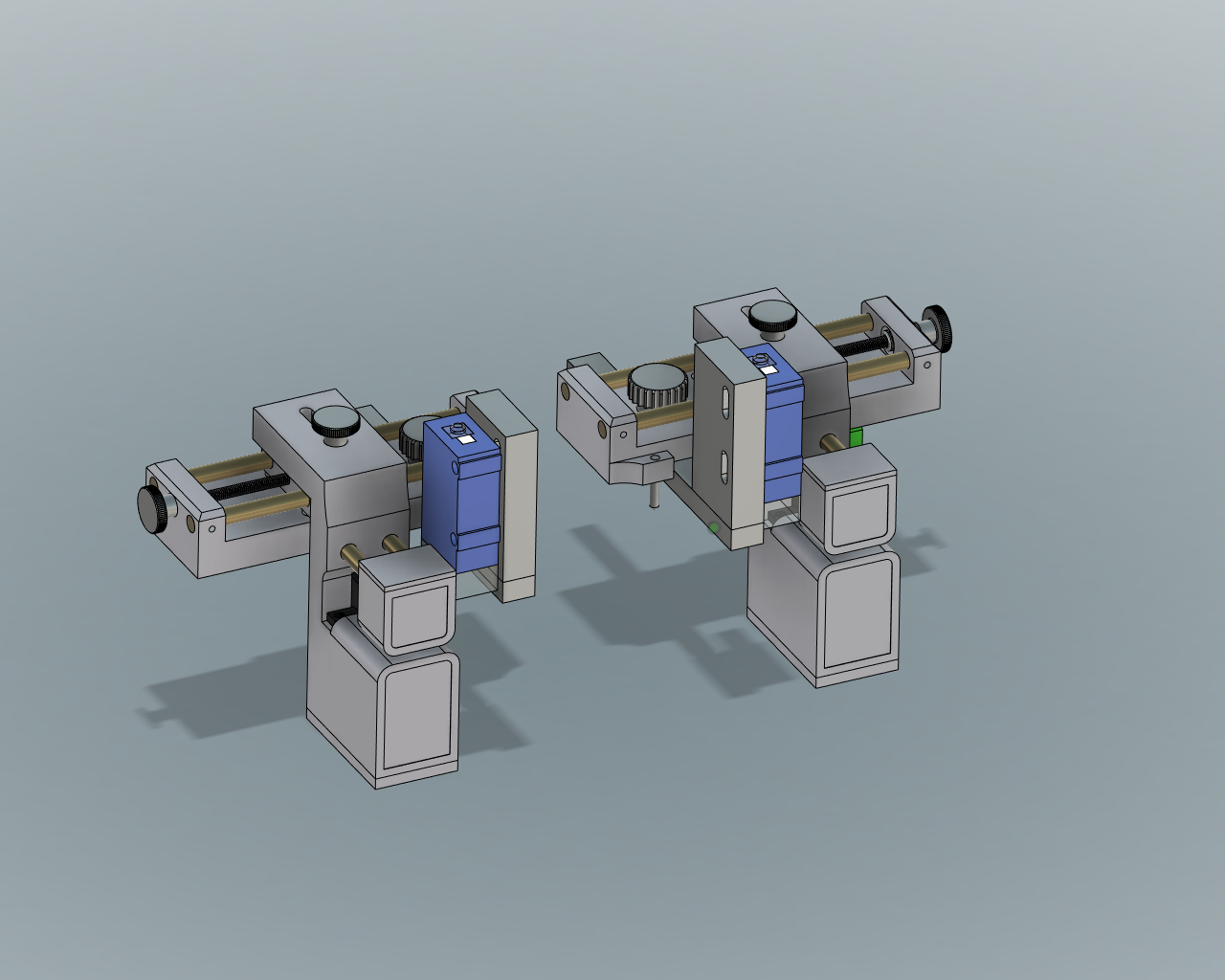
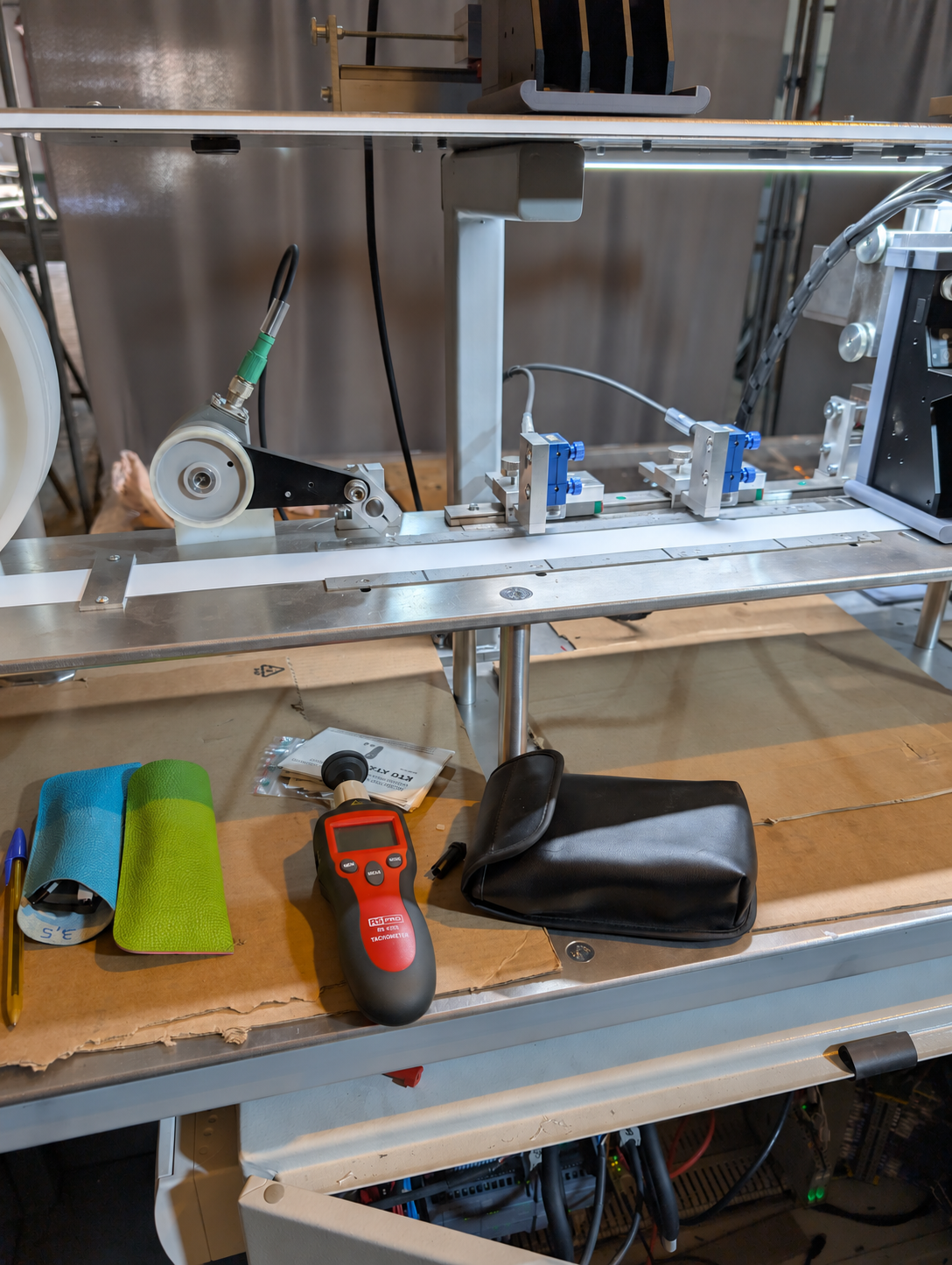
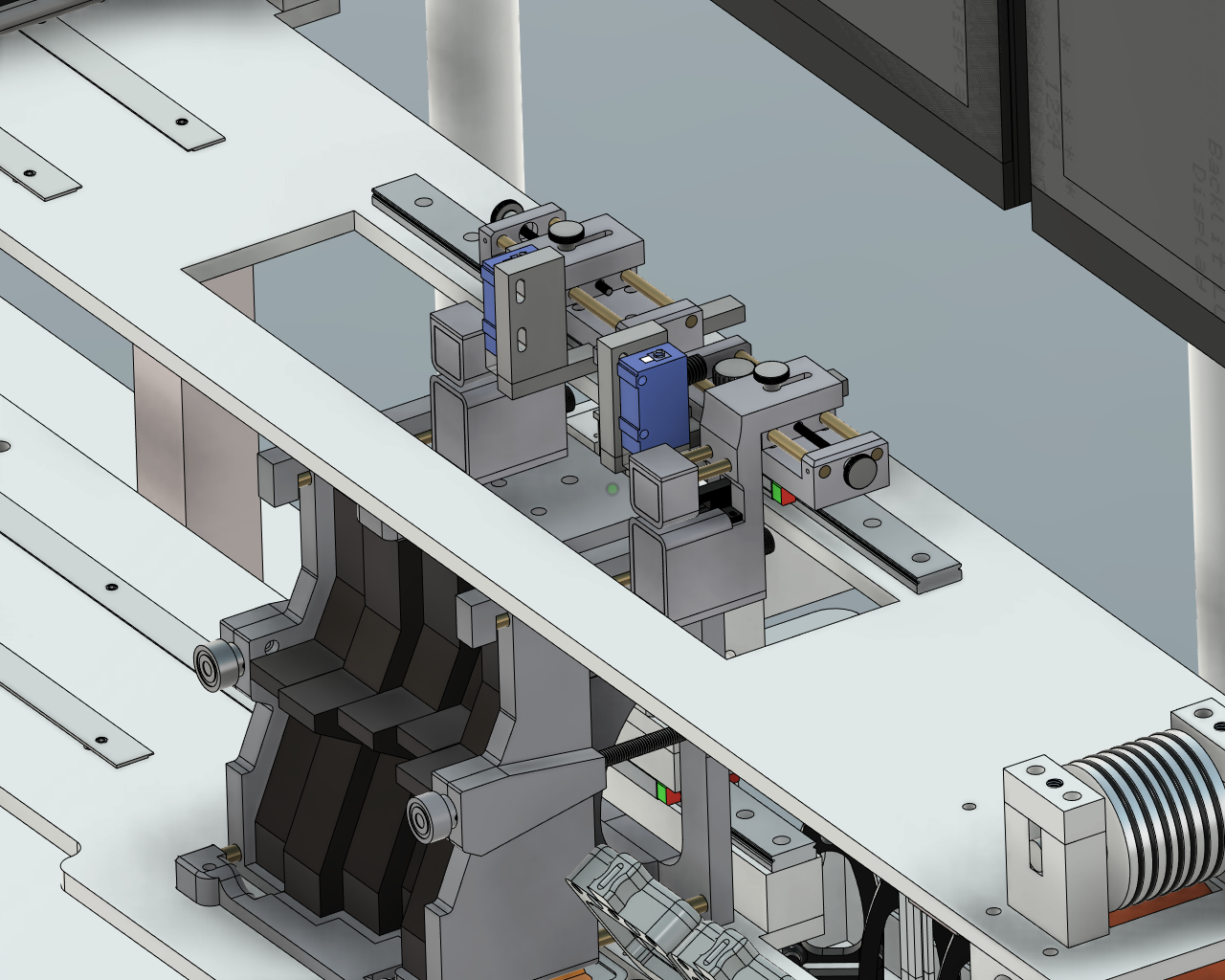
New arms and photoelectric sensor mounts were developed, together with fork optical sensors to detect the reference on the ticket edge. The machine retains the option to use marks on either side and adds detection for the unmarked format. The mode is selected on the HMI.
The arms position the photoelectric sensors across the ticket width; longitudinal travel combines coarse positioning along a guide with fine adjustment. Position references help restore known settings. The assembly supports and stabilises the web, because a small reference requires the product to hold its position as it passes.
This change resolved the missing prints reported on those jobs. Downstream inspection adds another level of control: if it detects an incorrect ticket, the process stops so the operator can intervene.
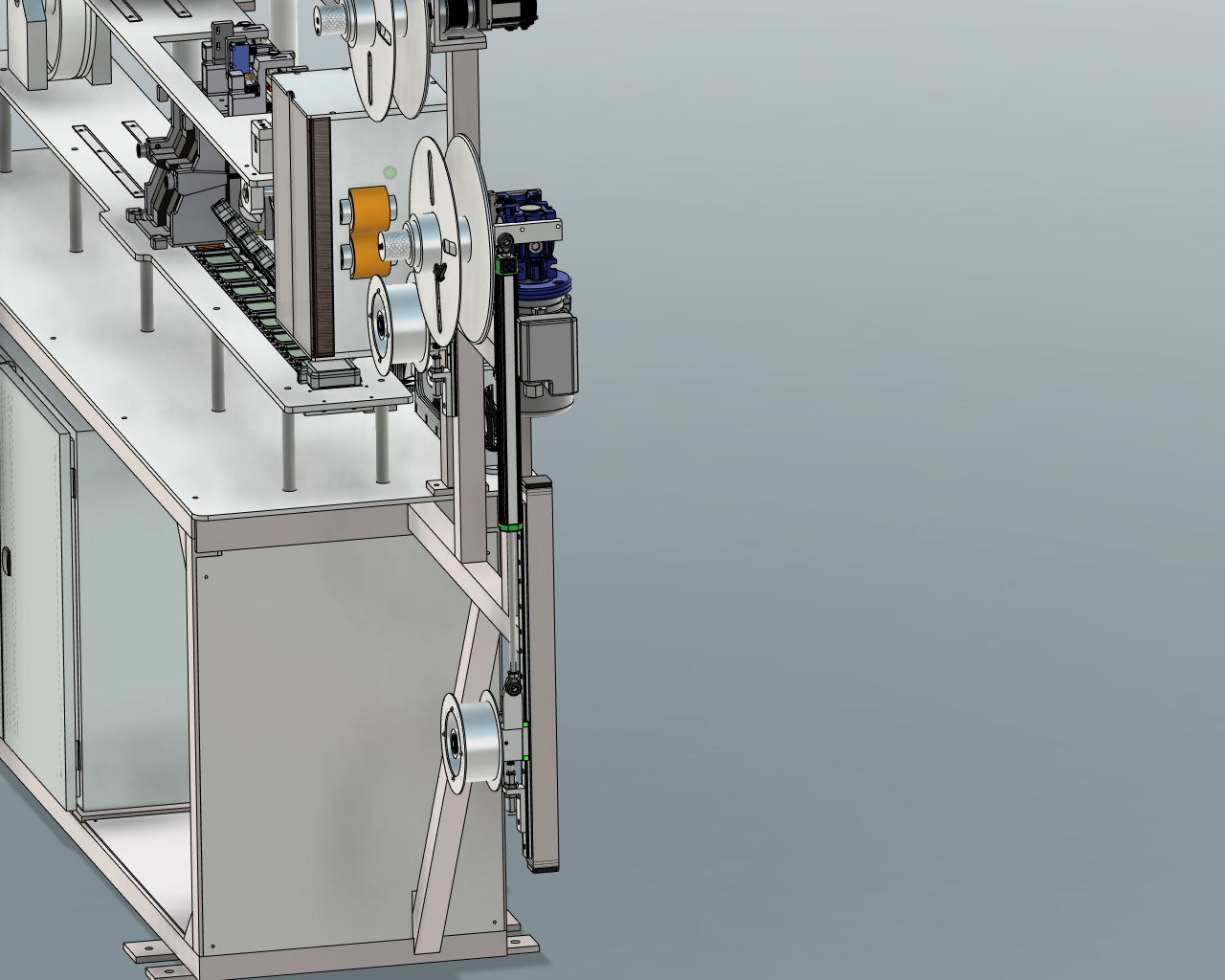
The transport must support a process that alternates encoding waits with web advances. Unwinding, pulling and winding work together to feed the stations and collect the product without jerking it.
The input and output tension compensation systems absorb these variations in motion. The drive is adapted to the RFID ticket's characteristics and accounts for the chip inside it. Product protection is part of the web-path design, alongside print position and reading stability.
The web follows a defined path through printing on both sides and inspection. During reel changes, a length of material is retained to splice the next web and keep the machine threaded. This arrangement supports everyday operation and long production runs.
Reducing encoding time made visual product checks more demanding for the operator. AI-based vision was incorporated into CCPB7 to inspect tickets within the process and detect issues before rewinding was complete.
Inspection checks both sides and the ticket's personalisation. It also allows the chip's position within the material to be observed. The checks therefore cover printing and product layout, aspects that became difficult to monitor continuously as throughput increased.
When the system finds an incorrect ticket, the machine stops. The operator can invalidate it and continue the process; the fault is recorded in the customer's software. Intervention on the ticket is part of the intended workflow.
7Axis developed the physical enclosure and its integration into the machine. The inspection software comes from a specialist supplier with whom the customer was already working.
What is checked
Vision checks personalisation on both sides and the chip position. In this example, the inlay remains in place and the number on the second ticket has been printed out of position.
Green · correct positionRed · incorrect positionIllustrative example with fictional personalisation.
The vision enclosure serves two purposes: isolating inspection from changes in room lighting and containing the system's light so that it does not disturb people working nearby.
It is integrated into the web path and has two hinged doors made of smoked polycarbonate. The design provides access for setup and keeps the inspection area separate from the surrounding environment during operation.
The machine's compact layout constrained access during initial adjustments. The enclosure shares space with the other stations and the product path. Final vision-system checks were completed at the customer's premises, in coordination with the software supplier.
This development illustrates another part of the project: preparing the physical environment that an inspection application needs to work within the production process.
7Axis developed the machine's automation and functional integration: it controls advance and coordinates encoding, printing and vision signals.
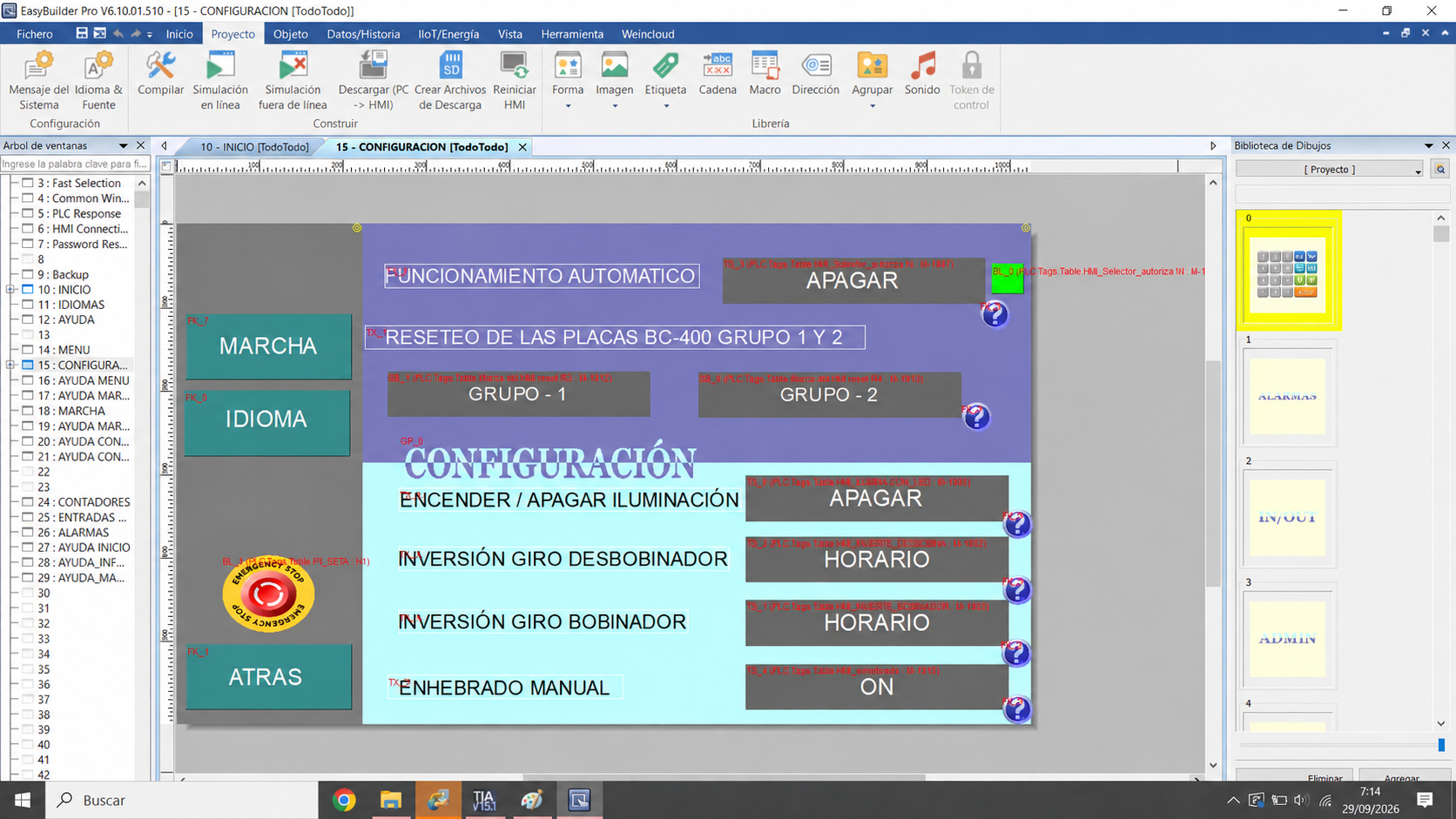
The HMI allows supported formats to be selected and the advance to be configured. The usual setting is ten tickets, while shorter advances or continuous operation can be used for tests. The screen also includes ticket and operating-hour counters.
The HMI can also reverse the direction of the winding and unwinding plates to adapt the machine's working direction to particular jobs. Speed is adjusted with a potentiometer, directly from the operator's workstation.
Integration connects these functions with product transport: waiting for encoding, advancing with the correct reference, printing during movement and stopping when an issue is detected.
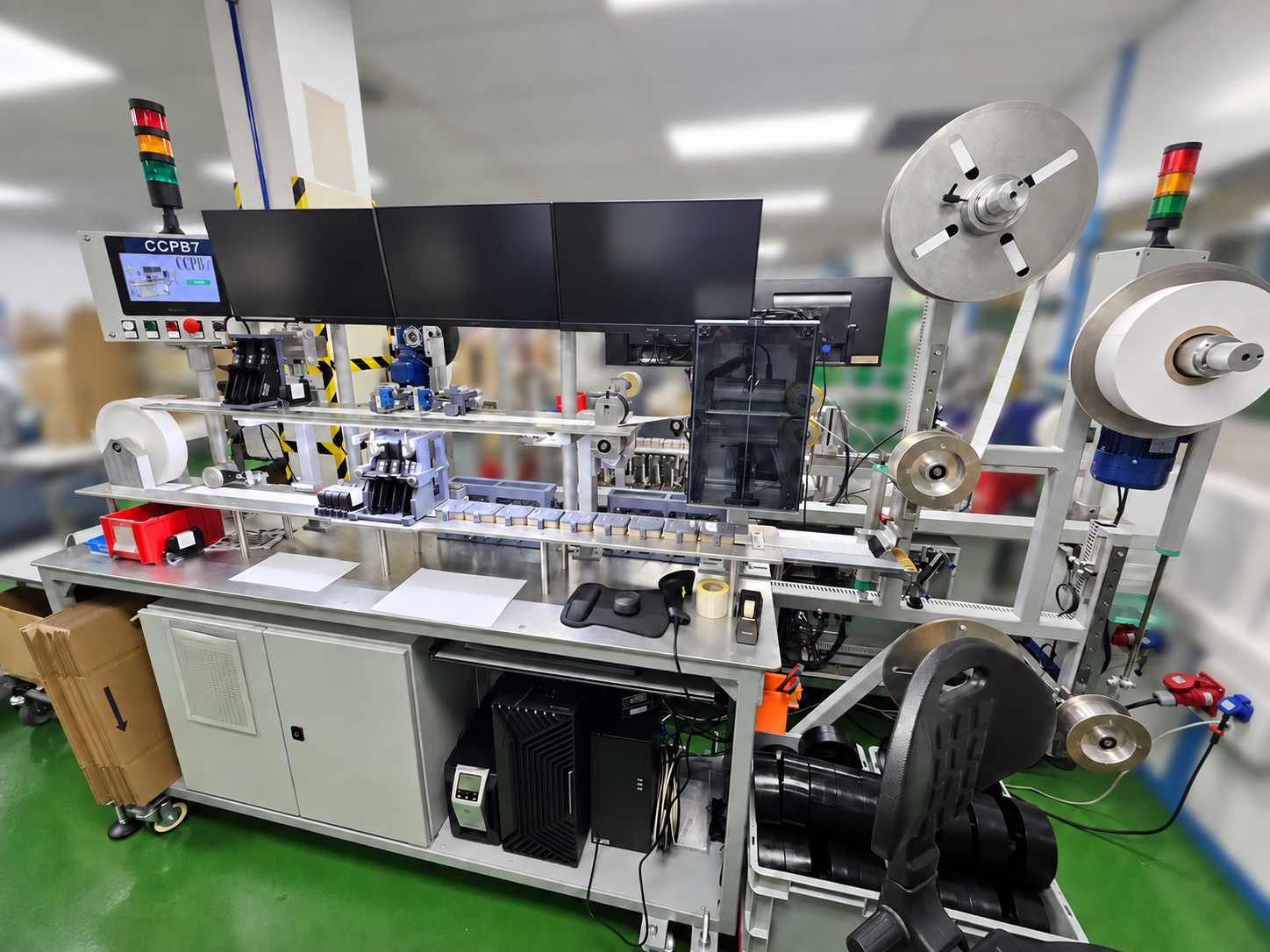
Custom guards were designed and manufactured for the PCBs controlling the encoding antennas. These housings contain the electronics at the rear of the machine, with windows that keep them visible without leaving them exposed. The guards are part of the physical integration of the assembly. The machine brings mechanics, electrical systems, control and specialist applications together at one workstation.
Integration with the customer's software for encoding and print content, and with the vision supplier's inspection application.
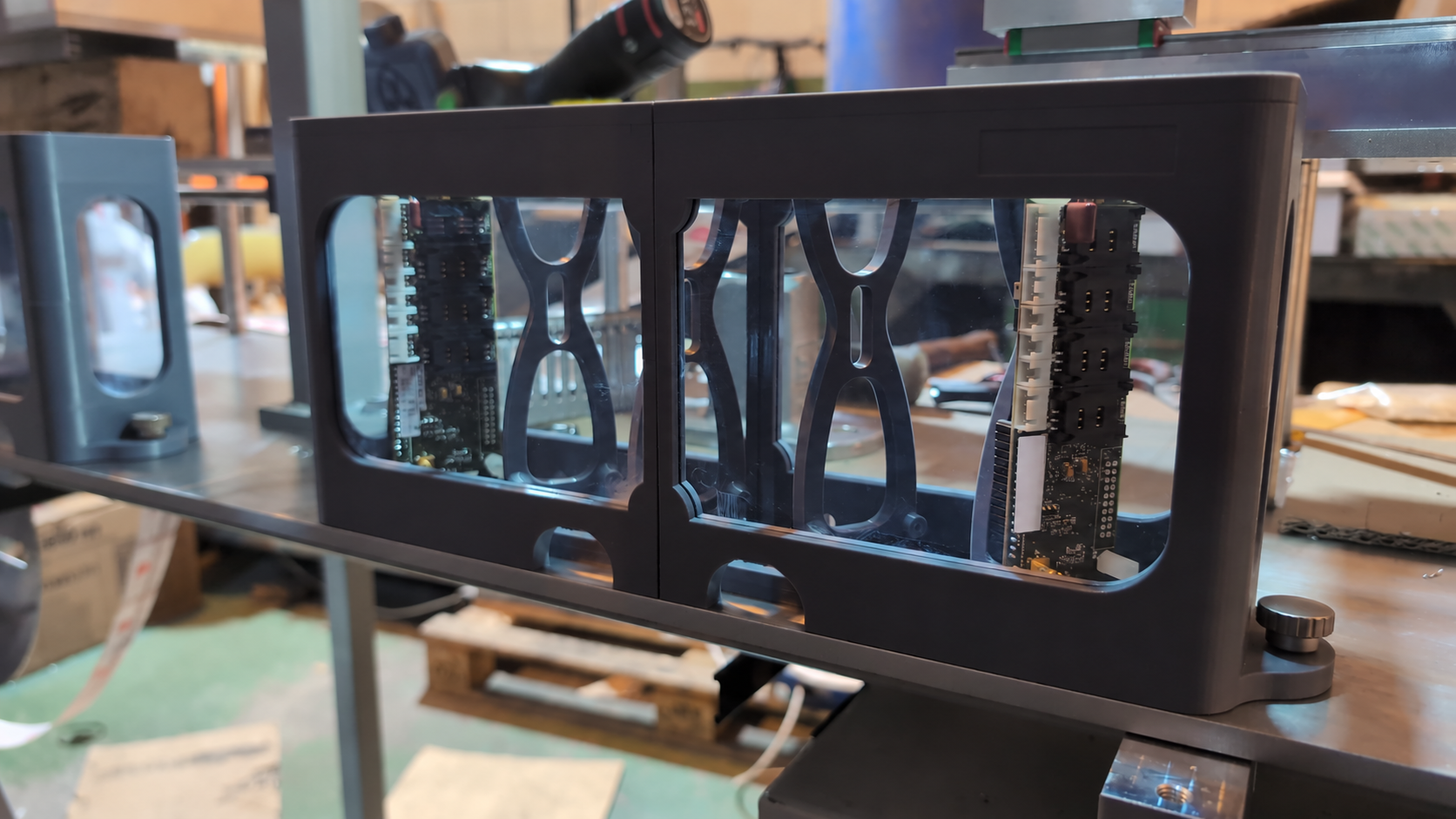
The first machines in the developed series and the starting point for its evolution in production.
Expanded personalisation on the configuration preceding RFID shielding.
Shielding was introduced on CCPB5 and its improvements extended across the series.
Adjustable boxes, adapted detection and integrated quality control.
The developed series comprises CCPB2, CCPB3, CCPB4, CCPB5, CCPB6 and CCPB7. The latest machine draws on the experience gained with its predecessors. Its evolution responds to specific production situations: interference that prolonged encoding, messages requiring broader print coverage and products with new spacing or references.
CCPB4 shows the configuration before shielding boxes were added. CCPB5 introduced the improvement that reduced encoding retries. CCPB7 added adjustment of the box assembly and vision inspection, while integrating the evolution of the printing and detection mounts.
Several improvements were also applied to machines already in operation. This brought new personalisation options and process improvements to earlier equipment.
The value of the development lies both in building the new machine and in using what has been learned to improve existing ones. Production experience feeds back into design and guides the next intervention.
Improving equipment already in operation
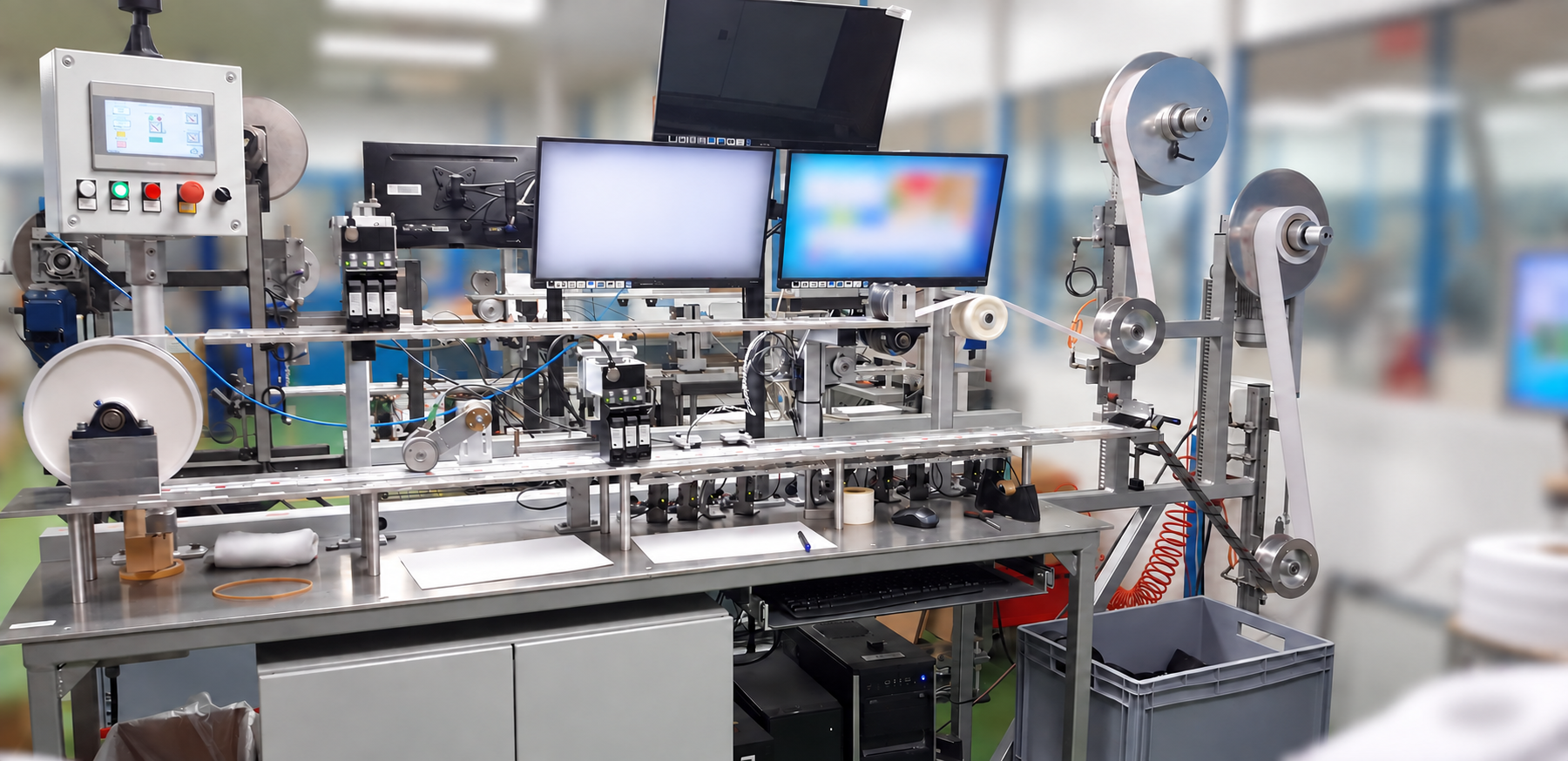
Reduce waitingShielding between encoding stations.
Expand personalisationEvolution of the inkjet printing mounts.
Make use of existing equipmentAdd improvements without replacing the entire machine.
The design brings together the entire web path, station positions, enclosure volume and different adjustments. The CAD model shows how these parts relate within the assembly.
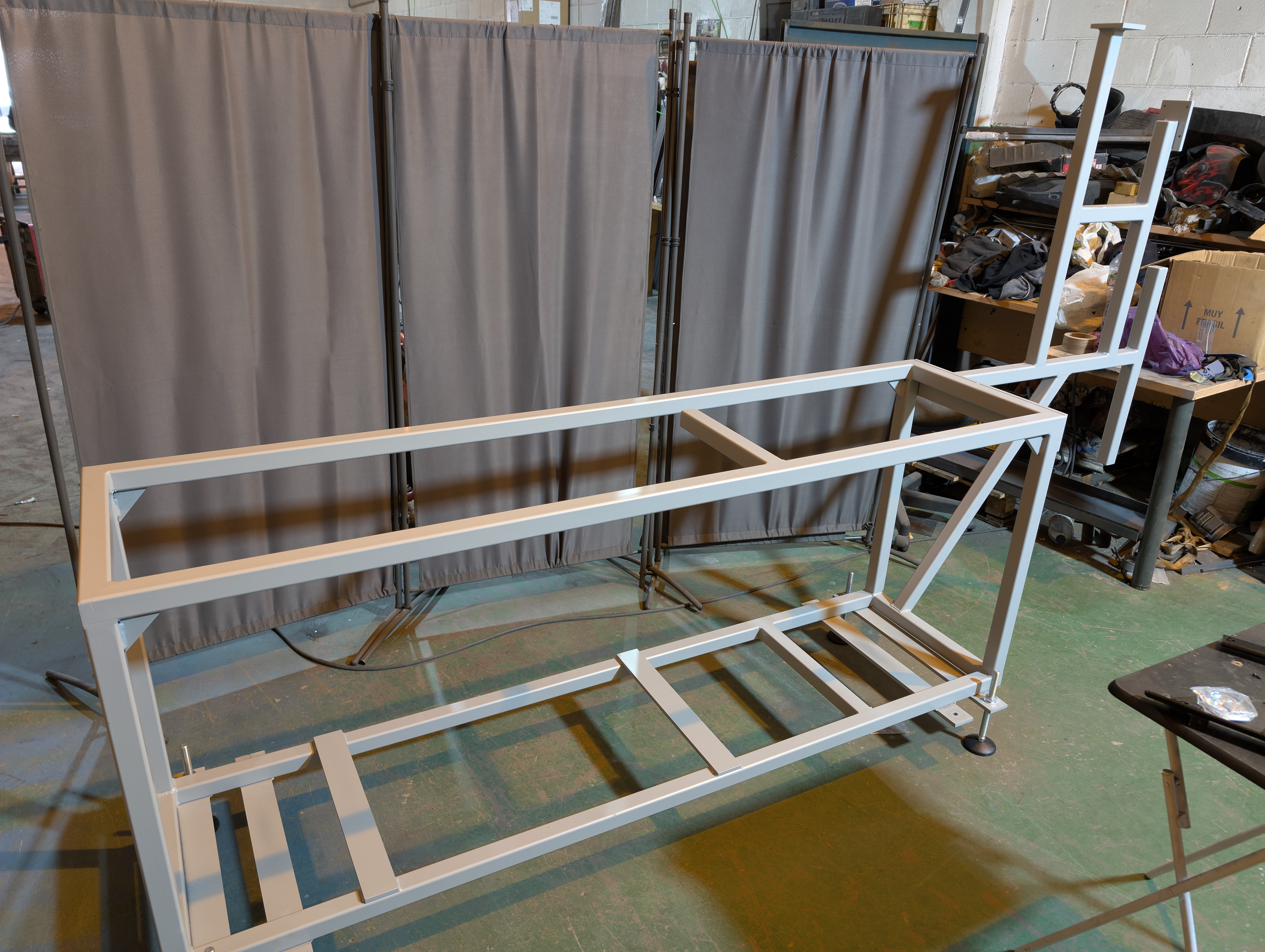
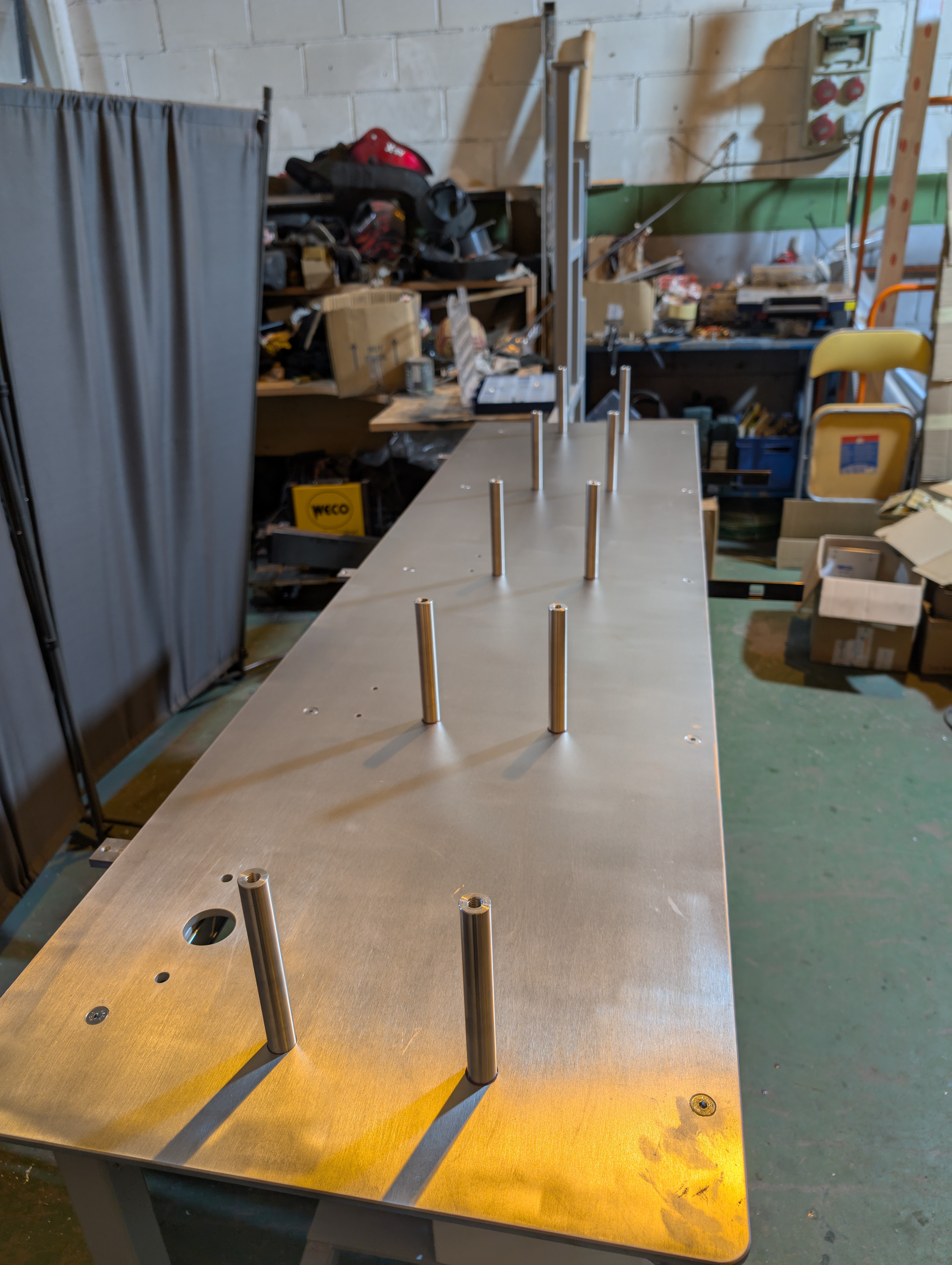
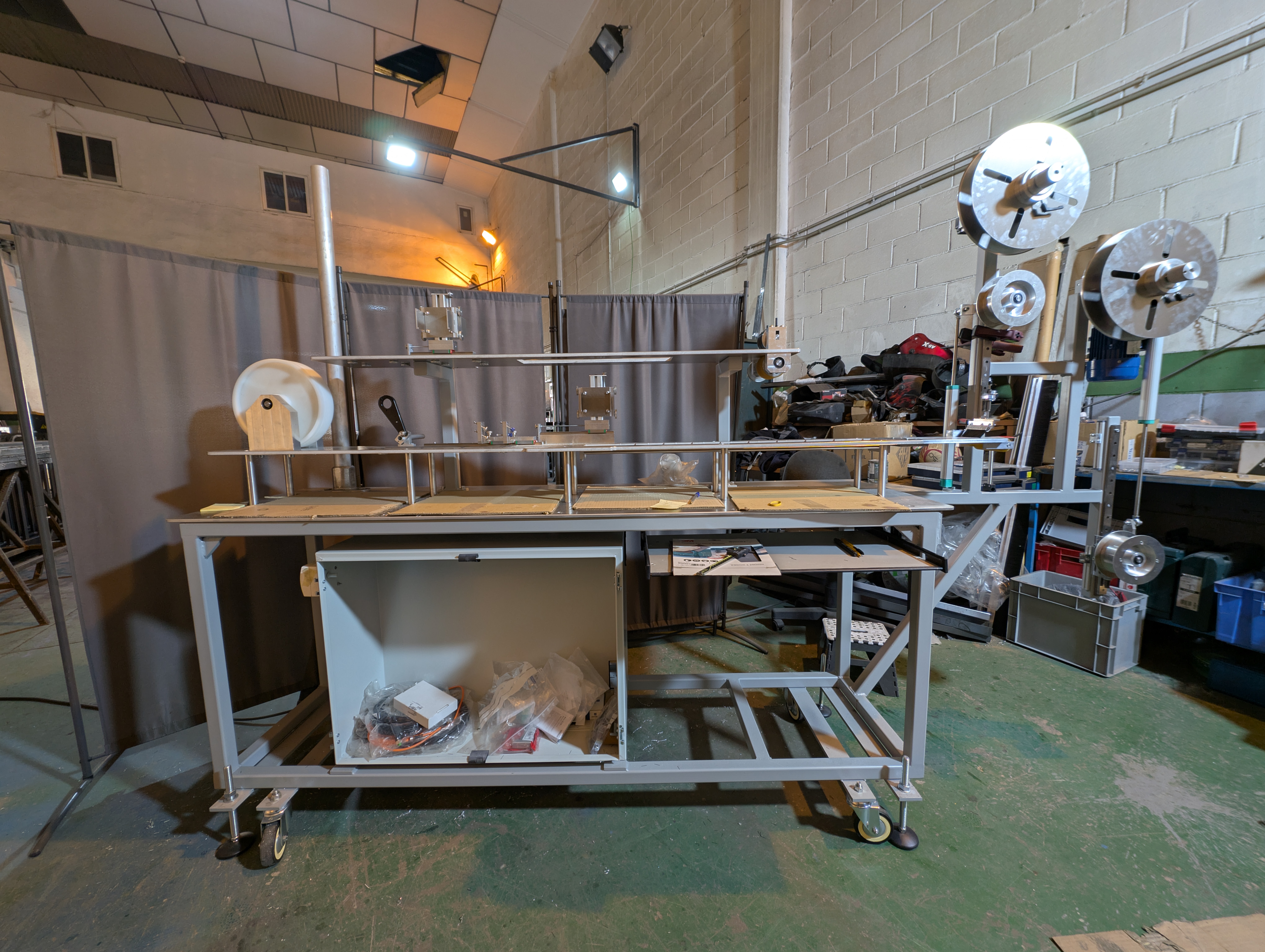
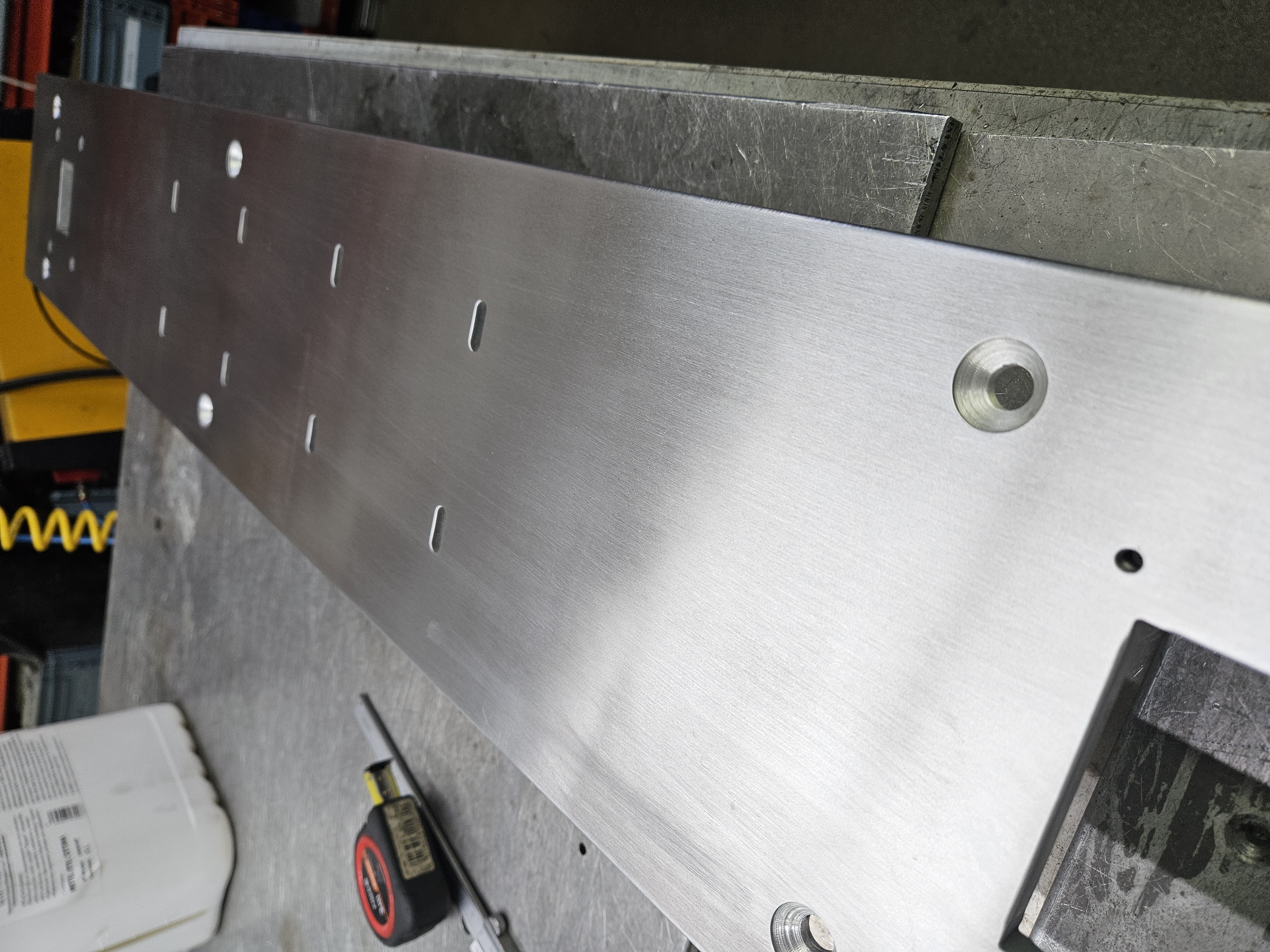
7Axis designed the machine, manufactured numerous parts on the lathe and milling machine, and carried out construction and integration. In-house work was combined with externally supplied machined aluminium parts and laser-cut machine beds. Finishing, polishing, chamfering and assembly were completed in the workshop.
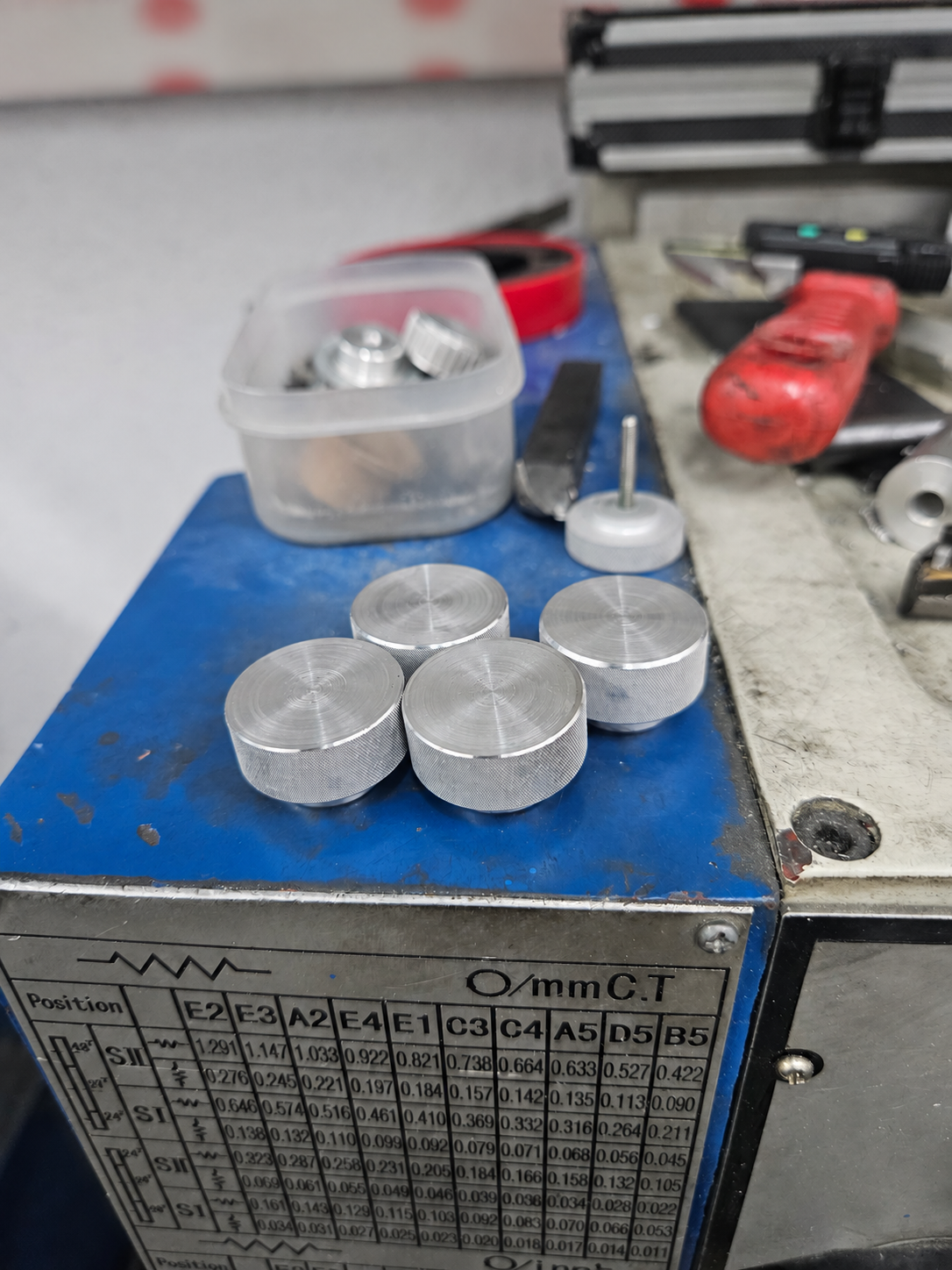
Machining and assembly are complemented by adjusting each unit to its purpose: restoring a working position, making a printhead change easier or keeping the web path stable. The turned knobs are one example of these custom parts within a broader manufacturing effort.
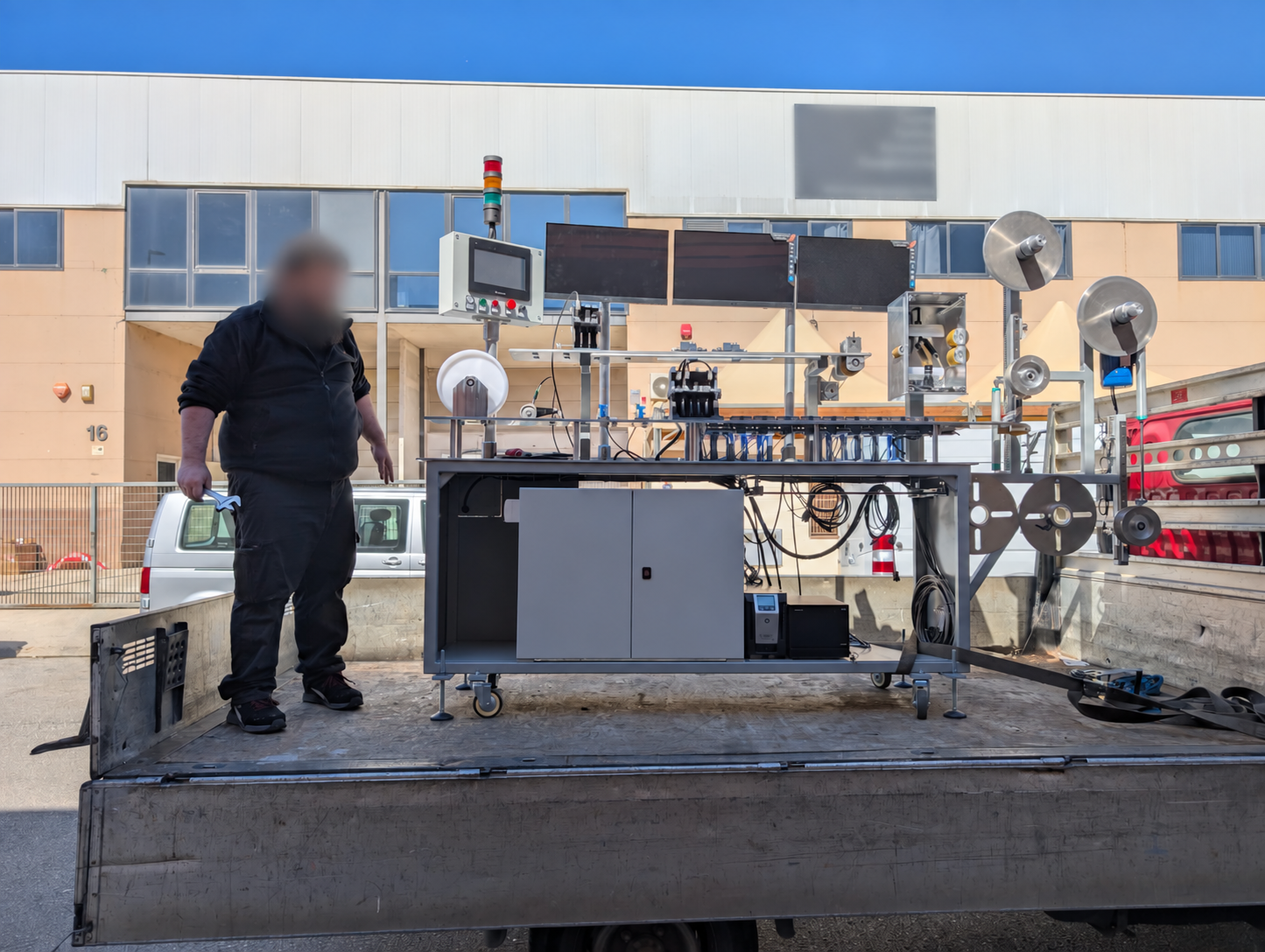
The construction photographs show progress from the frame to the addition of machine beds, web path, stations and control components. This sequence reveals the actual scope of the project and the work required to turn the design into an operational machine.
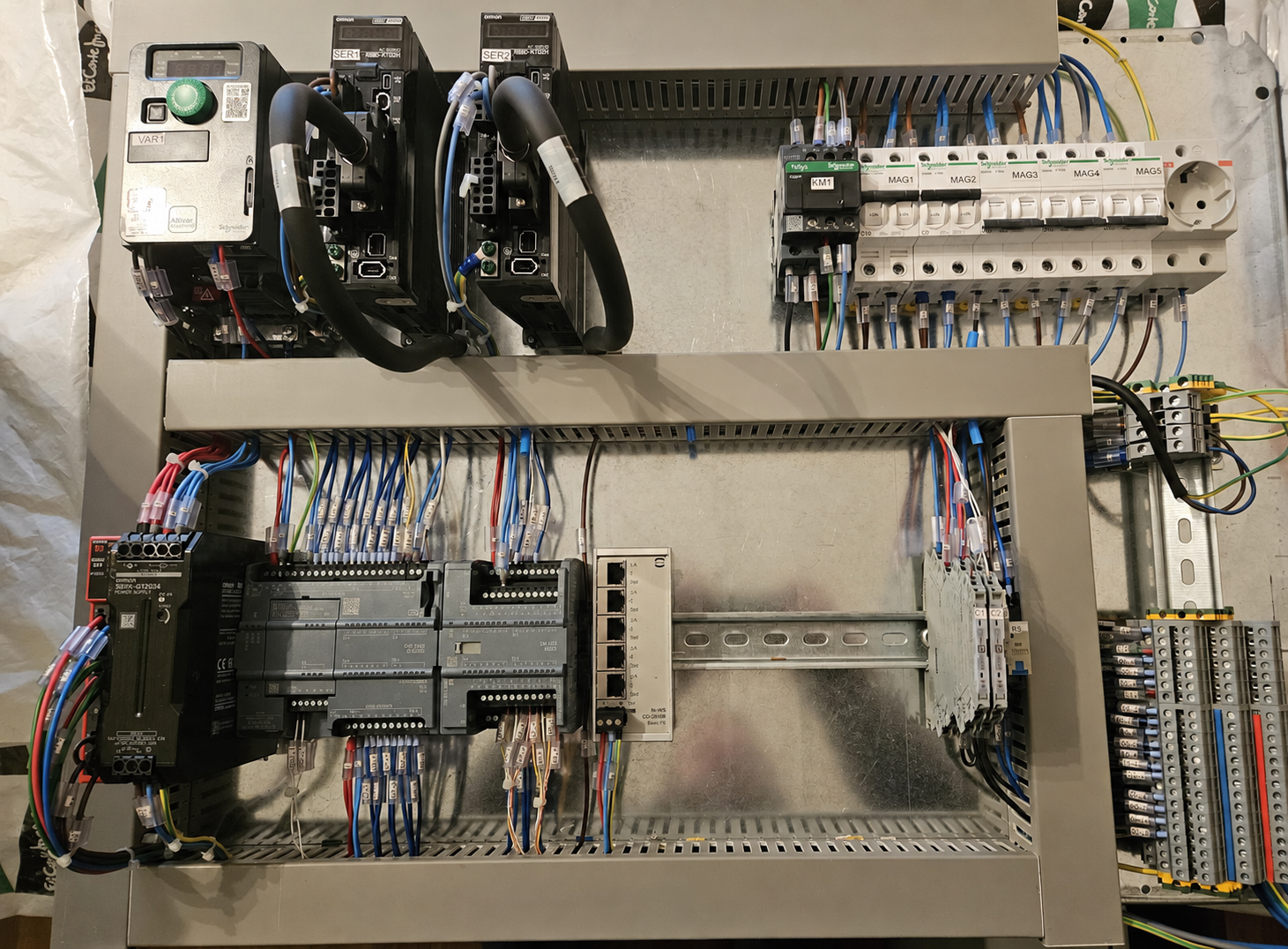
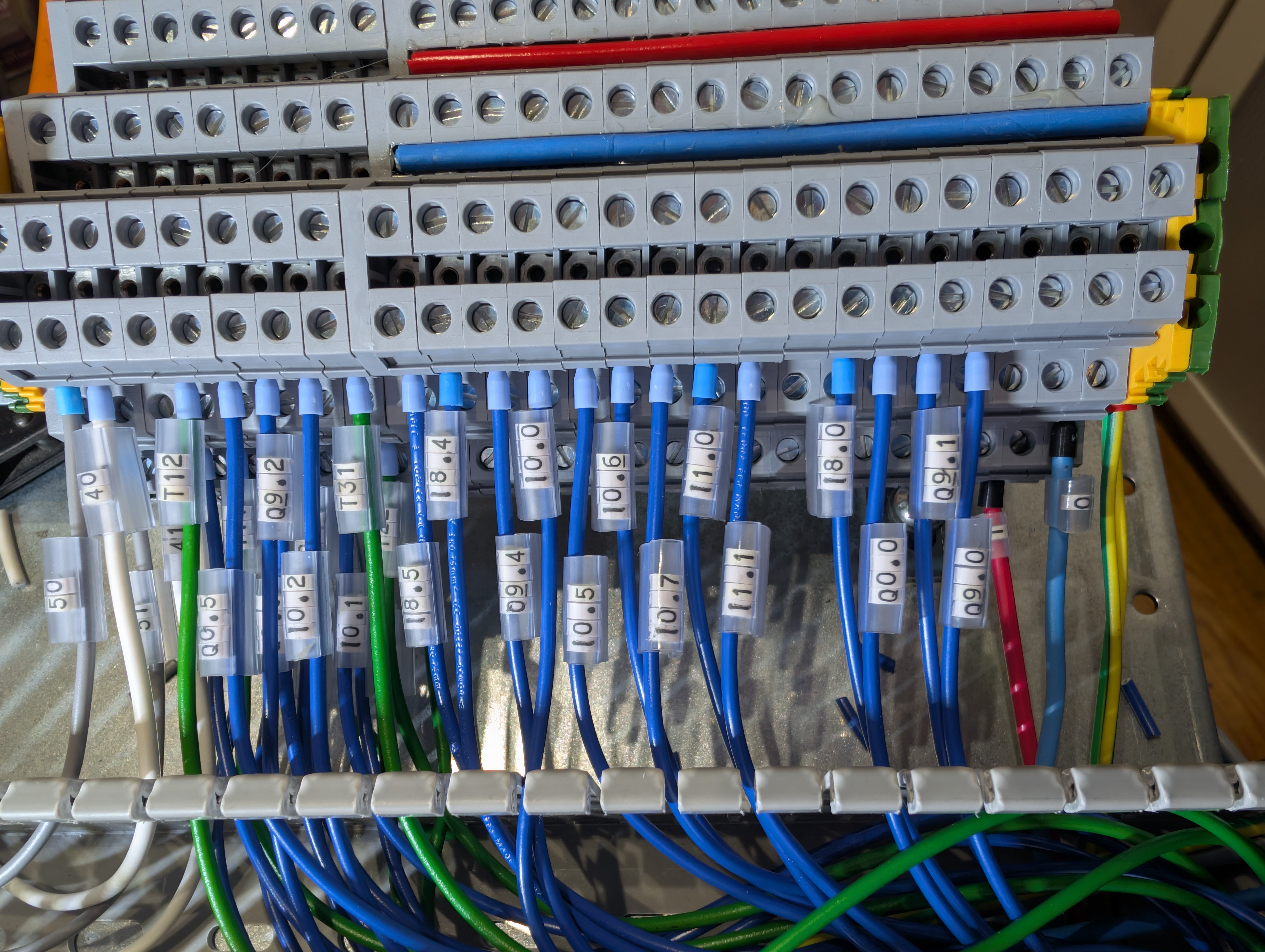

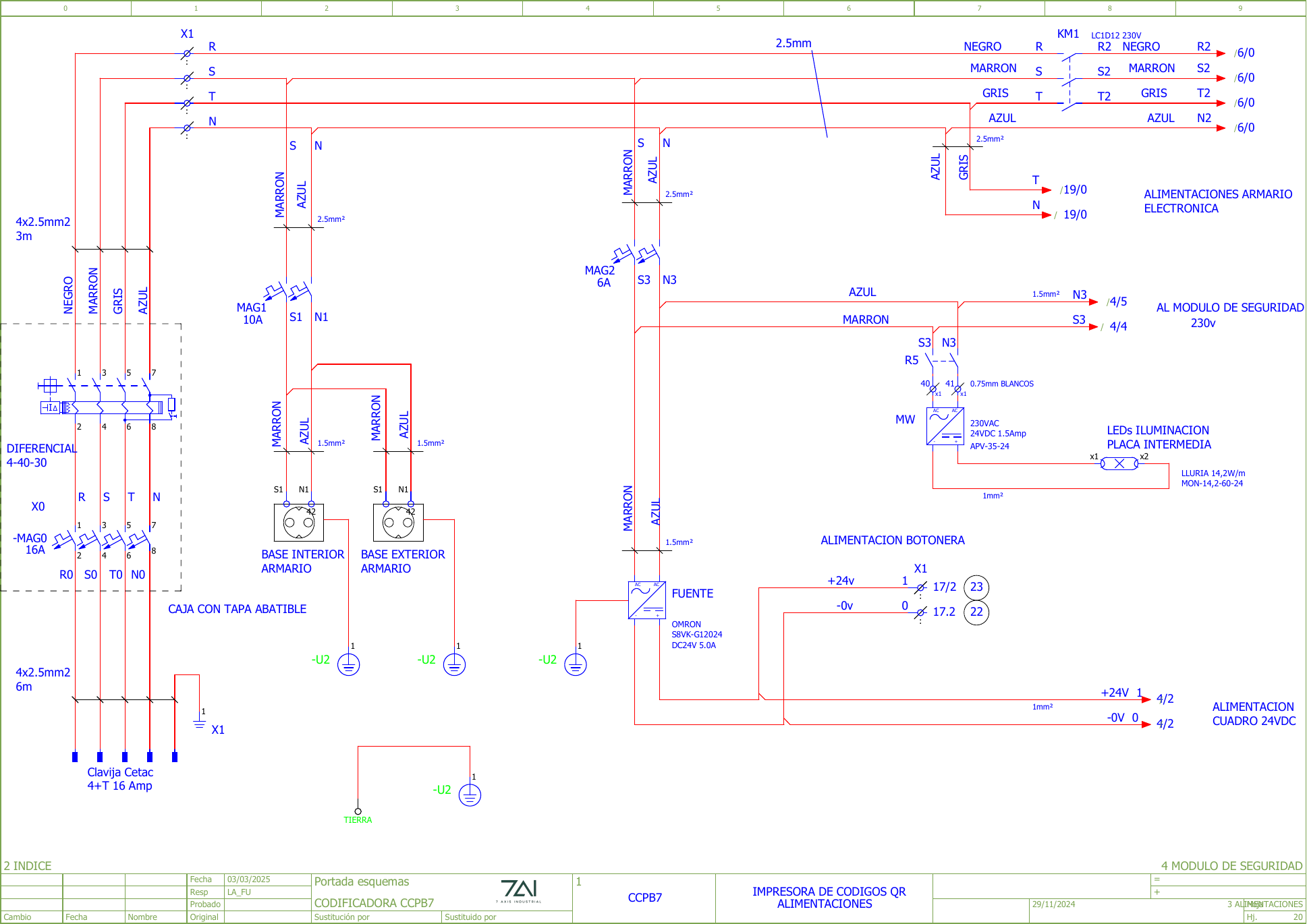
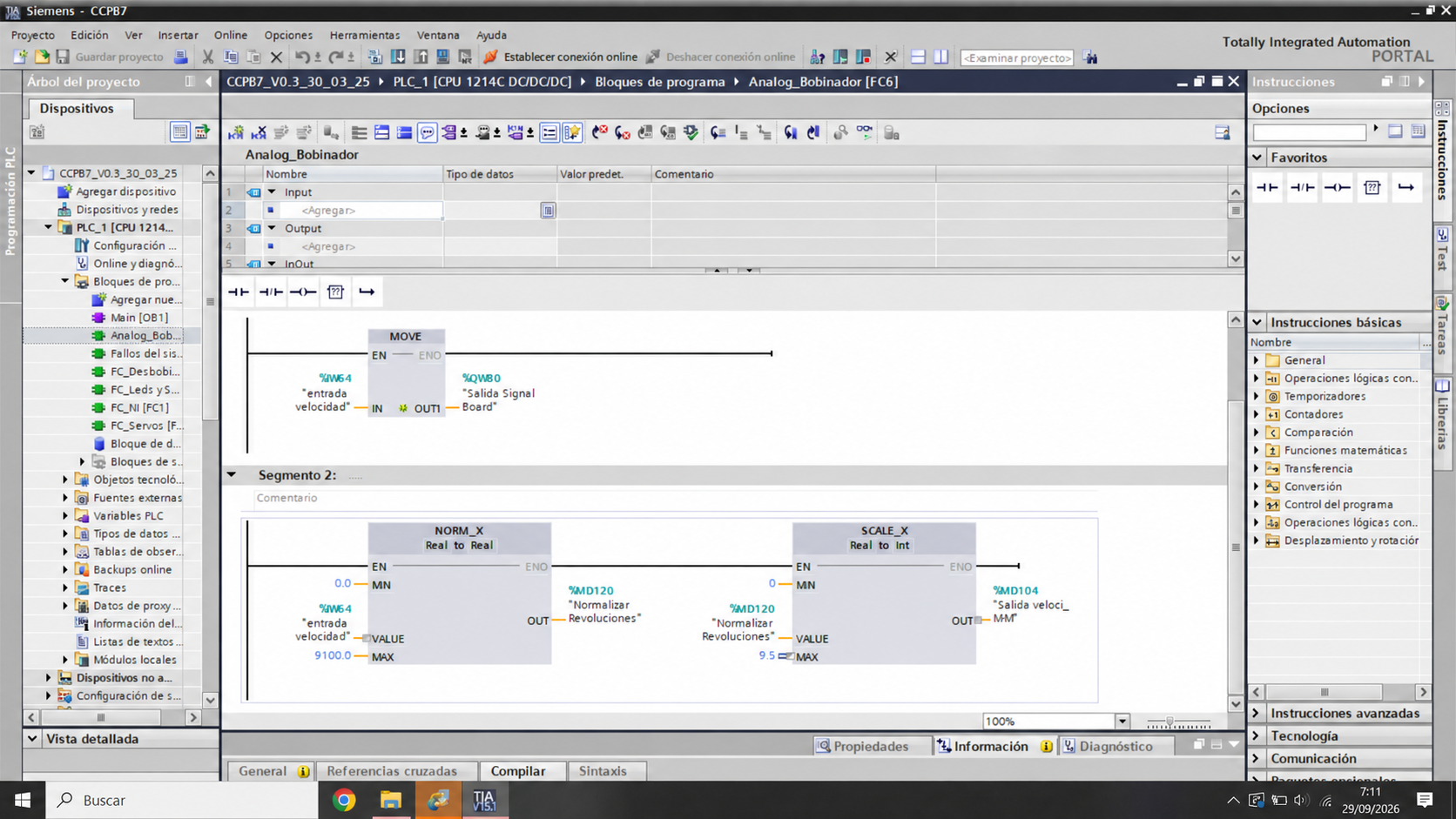
Electrical development and EPLAN documentation are part of the project, together with automation and equipment integration. 7Axis's work includes PLC programming in TIA Portal and the development of operating screens in EasyBuilder Pro. The selected diagram shows part of that documentation. The electrical cabinet brings together machine control, power, wiring and a dedicated safety module.
As well as preparing diagrams and instructions, documentation was added to the HMI. Information can therefore be consulted on the machine whenever the operator needs operating guidance or a technical reference.
Delivering a machine also means making its operation understandable. Here, documentation accessible on the screen supports the training and physical adjustment references of the different assemblies.
Adjustment references, training and on-screen documentation help operators set up familiar jobs and perform routine machine tasks.
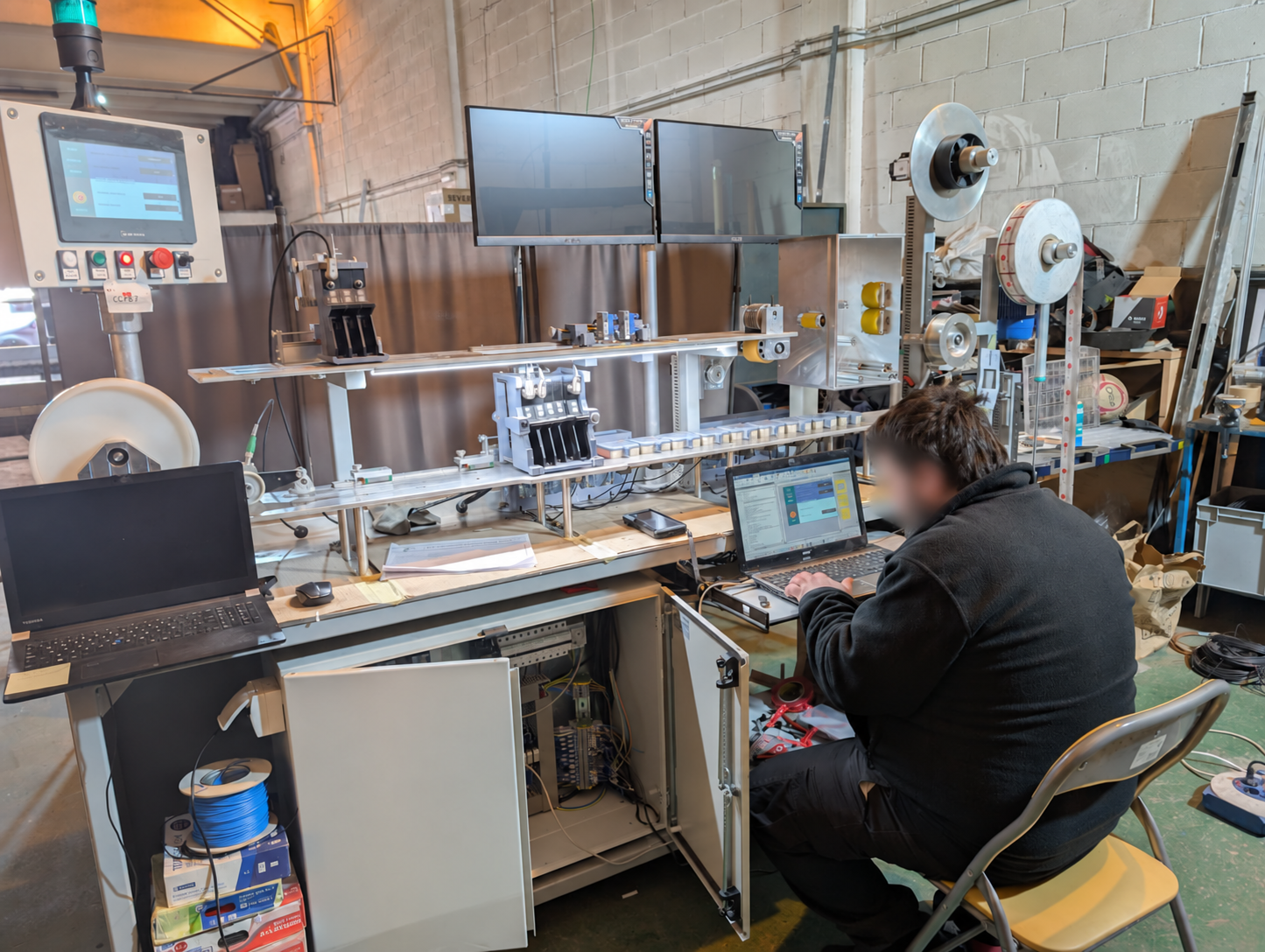
Before leaving the workshop, the machine underwent three to four days of testing with the web running continuously. This running-in period checked the web path and smoothed edges before the equipment was taken to the customer's premises.
CCPB7 was delivered two months after the order. This lead time refers to the physical delivery of this project and builds on developments and experience from earlier machines.
Vision testing was completed at the destination, with the involvement of the supplier responsible for its software. The installation therefore combines work prepared in the workshop with checks requiring final integration with the customer's systems.
Delivery included training. As the operators already knew the earlier machines in the series, explanations focused on CCPB7's new features, adjustments and operation of the new systems.
Equivalent output across six machines
An improvement applied across the series.
Tickets per shift if all six machines process the same job at the same performance level.
6 machines × 13–16 additional reels × 1,000 tickets
CCPB7's improvements address different parts of the process: less waiting during encoding, more personalisation options, support for different formats and inspection that stops the machine on a defect.
Operation retains adjustment references to restore familiar jobs. Inkjet printheads can be changed while maintaining their position, and documentation is available on the machine's own screen.
Routine maintenance is performed by the operator and includes cleaning at the end of the day and periodic lubrication of the specified components. The machine's robustness and the simplicity of these tasks reflect its use in long production runs.
The change from 11–12 to 25–27 reels per machine and shift shows the effect of RFID shielding on the reference job. The improvement was extended to all six machines in the series. If they all process that job at the same performance level, the increase is equivalent to 78,000–96,000 additional tickets per eight-hour shift.
Performance depends on the product, the checks required for its encoding and workstation operation.
The case brings together two 7Axis capabilities: developing a complete custom machine and evolving existing equipment in response to real production problems. Performance improvements go hand in hand with broader personalisation, format adjustment and product control.
Applied capabilities
Your next step
We can assess a solution tailored to your machine or process.