

Automating a manual operation: what to look at before commissioning a machine
The usual mistake is not automating too late. It is automating the wrong action.
Read the articleAutomation and purpose-built equipment
A semi-automatic machine designed to replace manual heat tacking and support the process from squaring to material verification.
View the technical development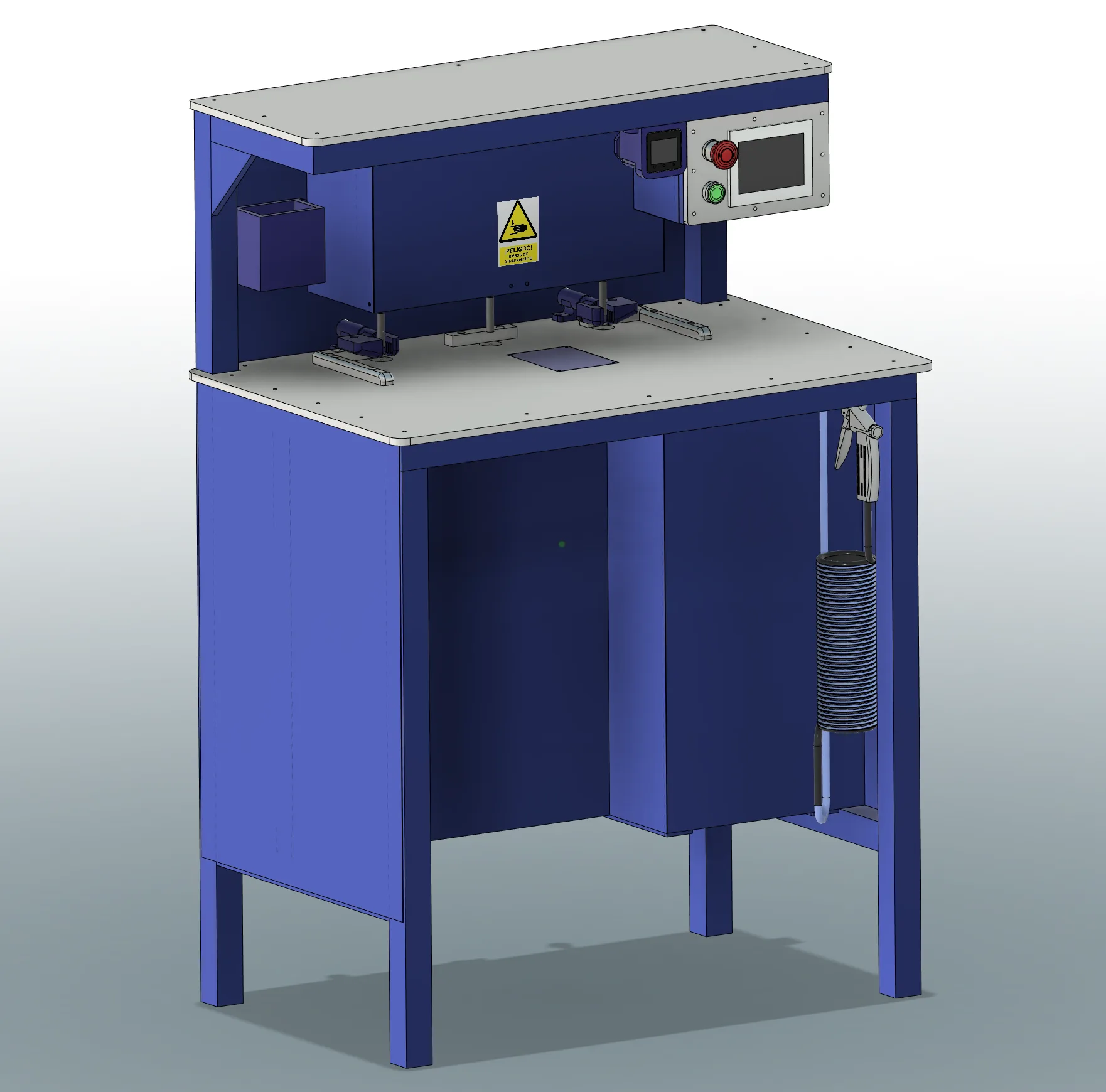
The problem
Stacks of sheets were squared and tacked using heated irons before lamination and die cutting. The tips passed through the layers and left an irregular raised exit mark capable of damaging the sheets.
The heat also produced carbon residue. Particles became trapped in the material and appeared after pressing as black specks, resulting in rejects.
A repetitive manual operation.
Localised thickness and particles in the material.
Waste and damage during lamination.
The machine
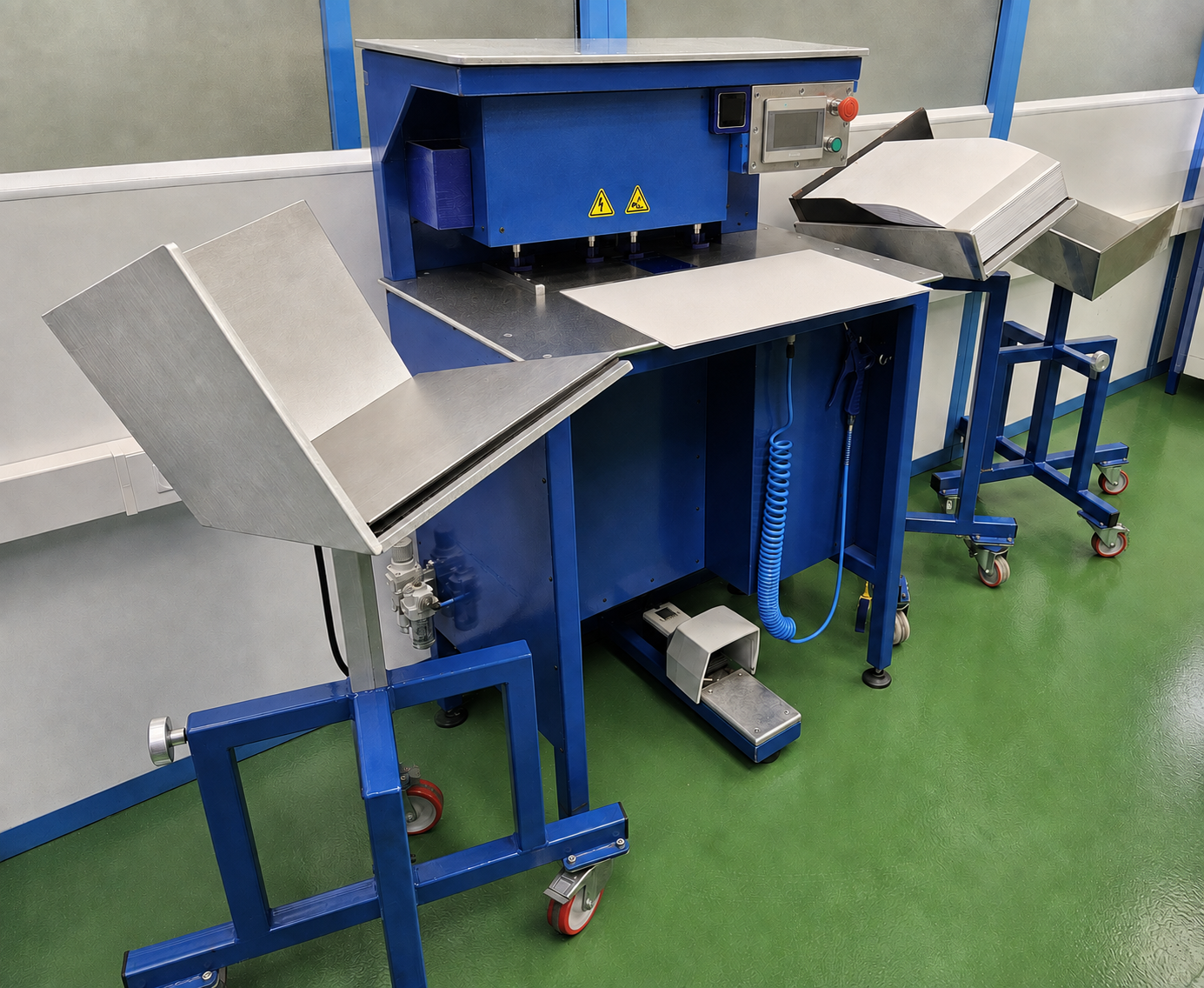
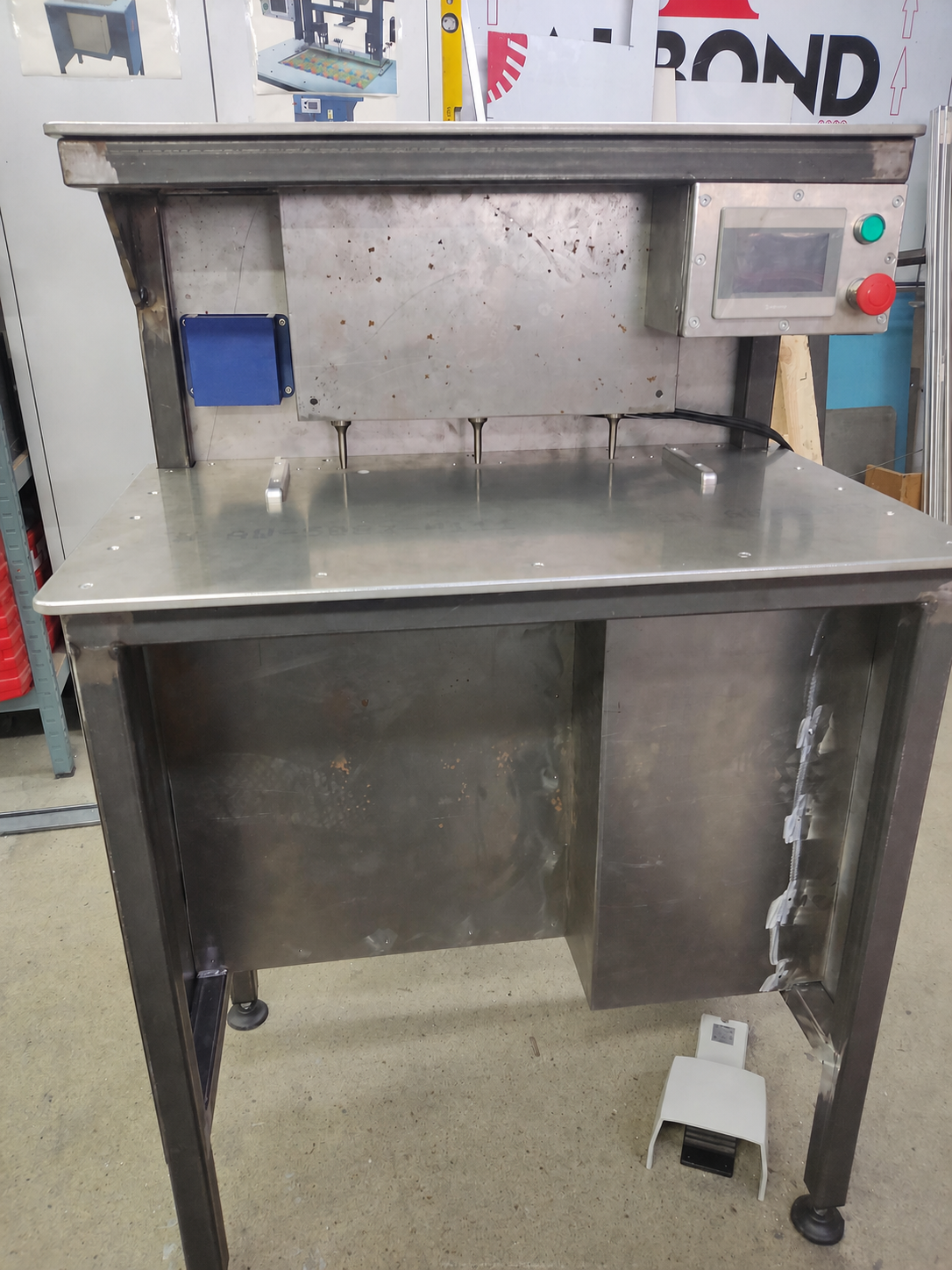
The foot pedal leaves both hands free to position the stack. The green pushbutton executes the same command when the work does not require that freedom.
Interchangeable stops for working from either side.
The hold-downs secure the layers before the tips make contact.
Three independent points with timings set on the HMI.
An optional air jet helps reveal an insufficient bond.
The air jet is a configurable visual check, not an automatic quality inspection.
Design and manufacturing
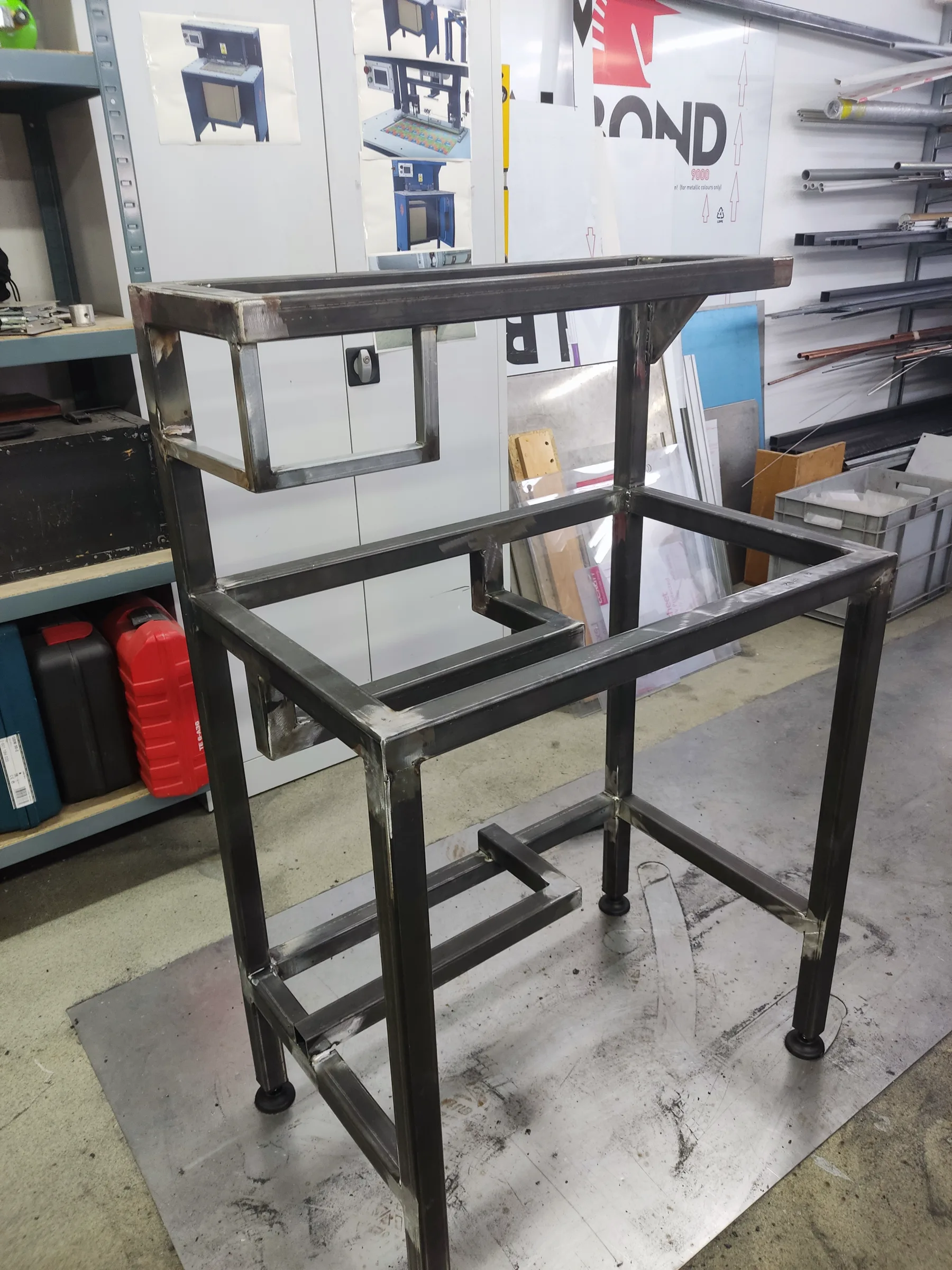
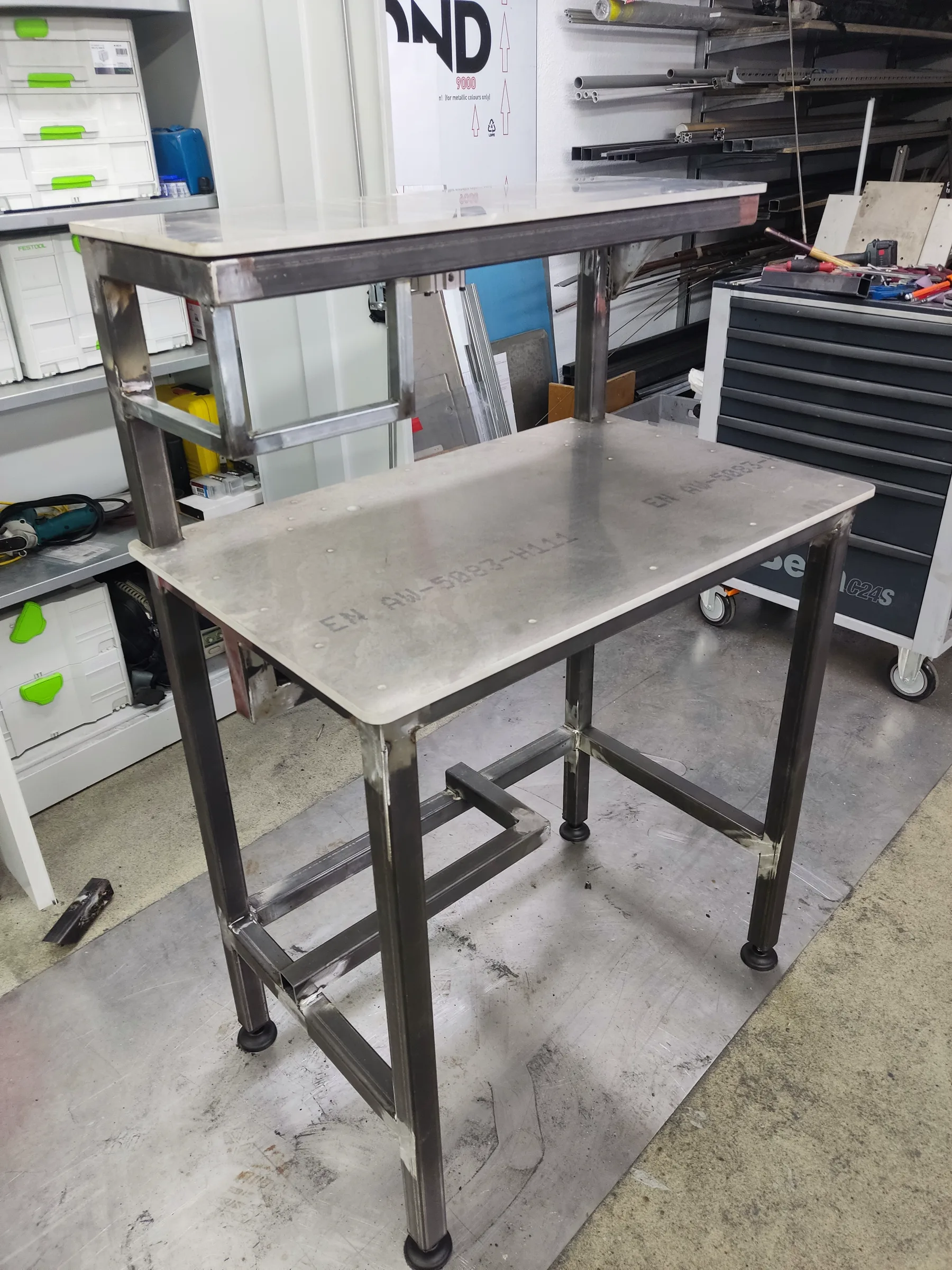
Development included CAD design, the structure, mechanics, electrical cabinet, assembly, PLC/HMI programming, commissioning and subsequent improvements.
 Enlarge ↗
Weld validation
During initial testing, the assembly was lifted and handled to check that the weld kept the layers aligned and joined before entering the laminator.
The test demonstrates the behaviour observed during that handling; it is not presented as a standardised strength test.
Electrics and programming
 Enlarge ↗
The design and wiring of the electrical cabinet are part of ALZA+'s in-house development. A Siemens LOGO! with expansion modules coordinates the sequence, alongside the protective devices, relays and connections the machine needs.
Programming and the HMI complete the system with welding timings, point selection and diagnostic functions.
Real operation
Instead of applying heat-tacked points one by one, the operation becomes positioning the stack and activating the machine. The hold-downs keep the layers in place and prevent them from following the sonotrodes as they rise.
Ergonomics and workflow
Two stands allow sheets to be picked up on one side and the welded stack placed on the other. Both allow the squaring support to be rotated and tilted; the adjustable version also provides height adjustment.
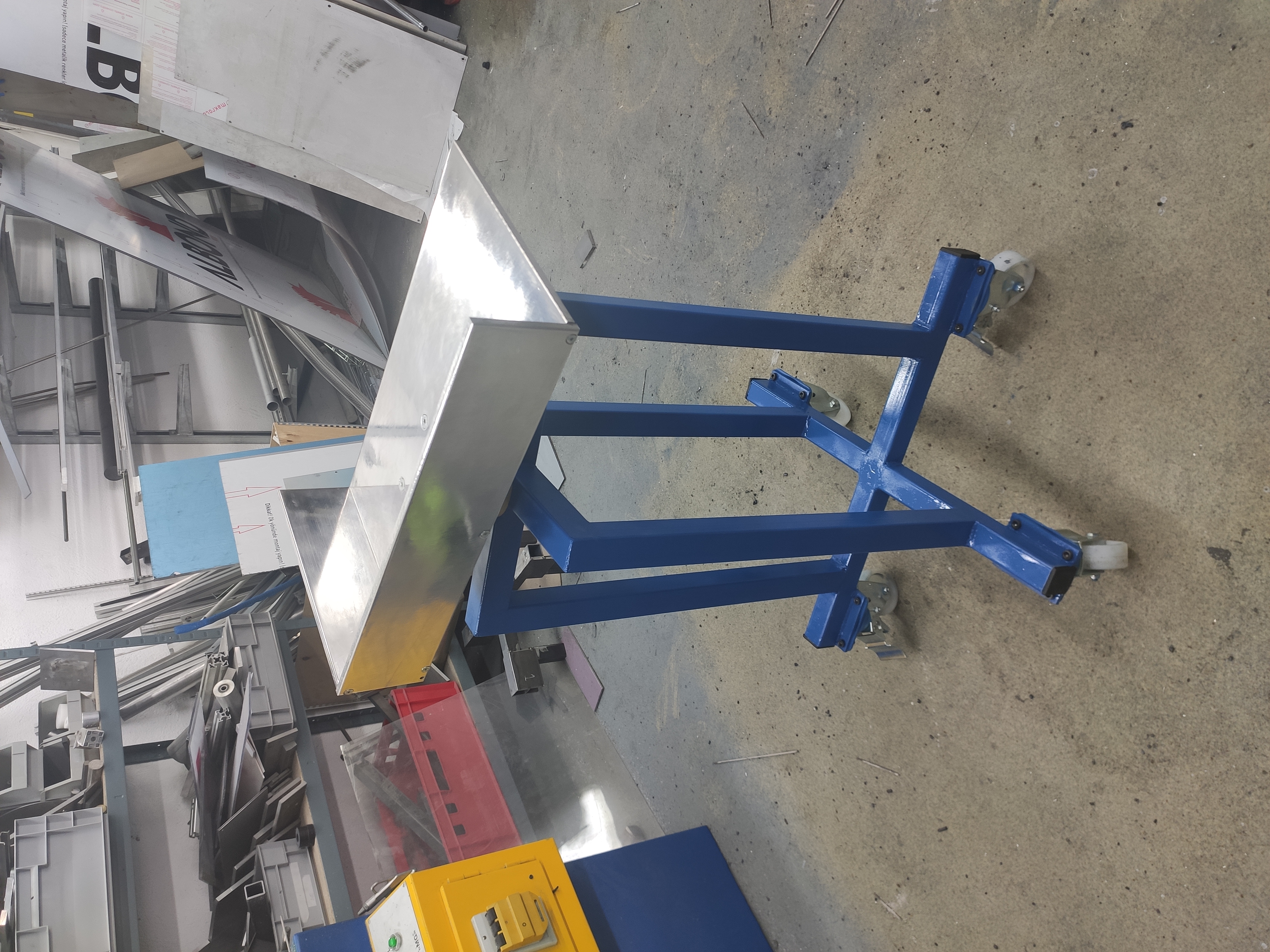
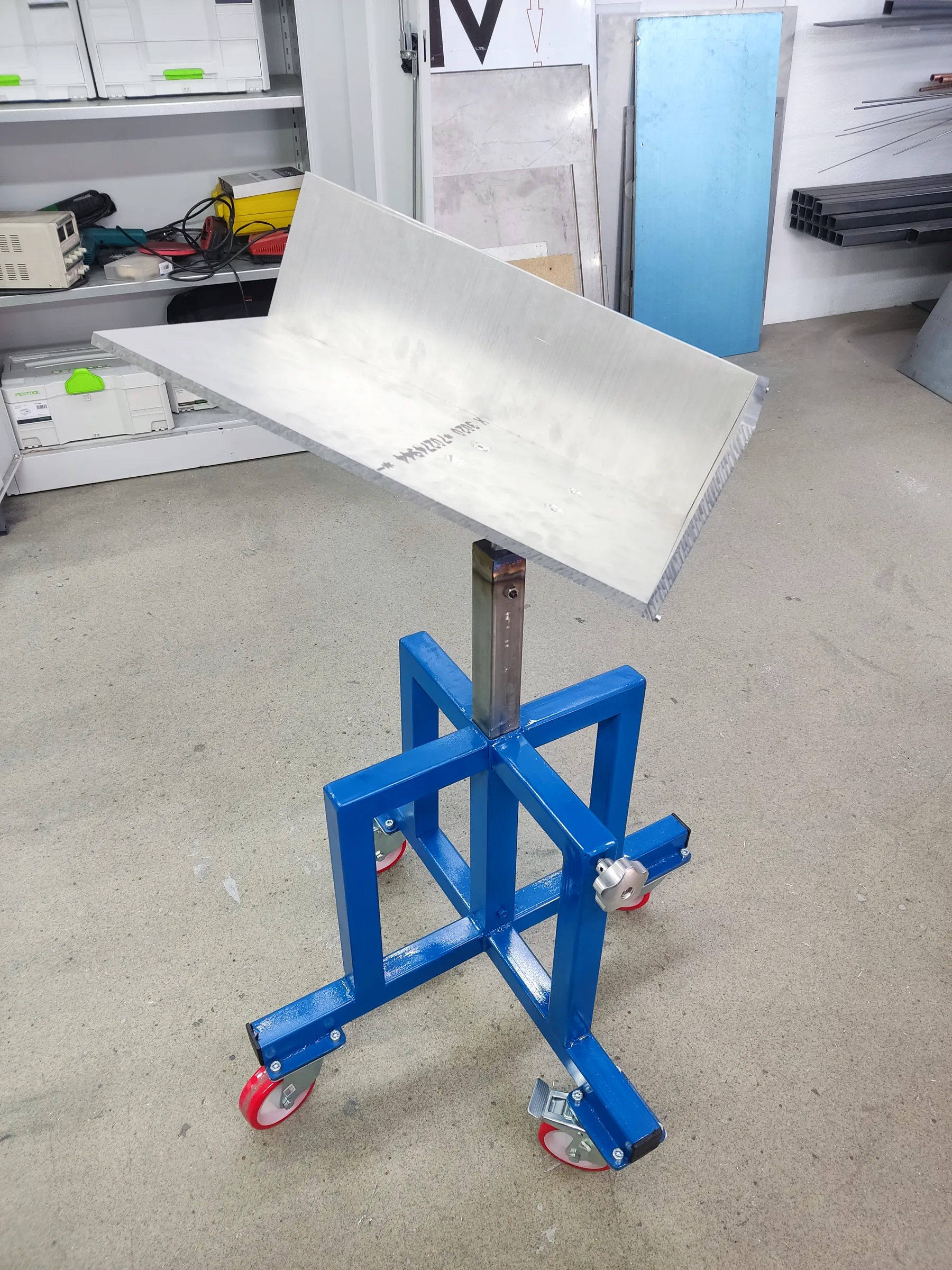
The tilt makes squaring by gravity easier. Adjustment brings the working area to suit each person, and the wheeled base allows material to be moved.
Development over time
The first version was developed in 2022. Later work added RFID validation, interchangeable backing pads and equipment and software adjustments.
Design, manufacturing and fine-tuning of the ultrasonic process.
RFID, consumables and control improvements.
Extraction hold-downs with an extraction chamber, suction connections and drainage.
The current configuration explores local extraction for work with materials that release gases.
RFID identification
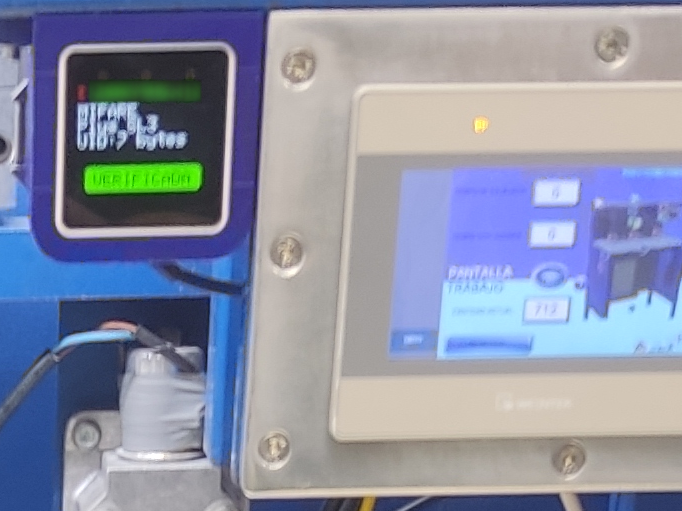
A reader plate recessed into the table checks the material's chip. A separate display beside the main HMI shows the result.
If the chip does not match the selected job, the system prevents descent and alerts the operator. This is a material mistake-proofing function linked to the job configuration.
Mechanics
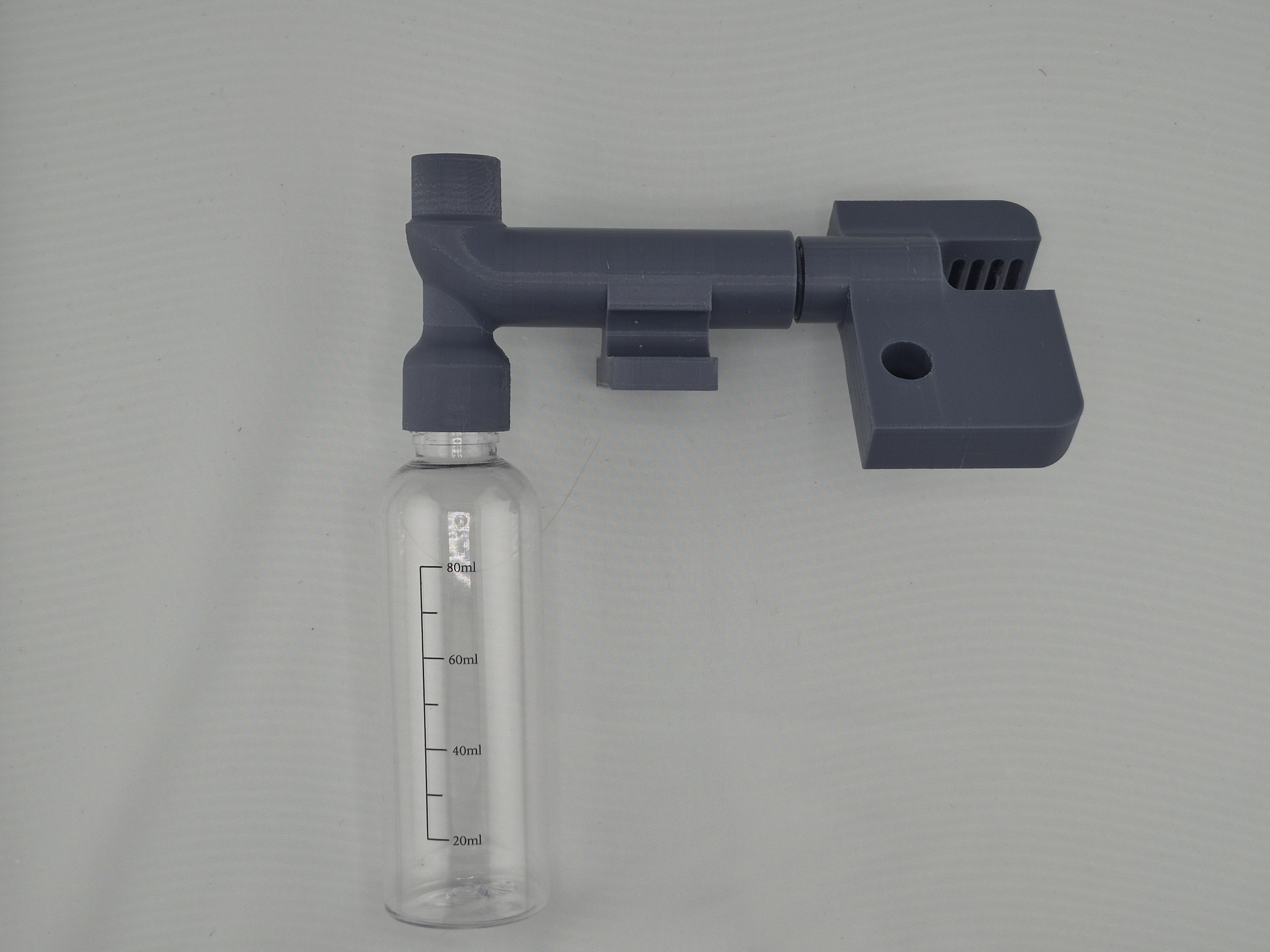
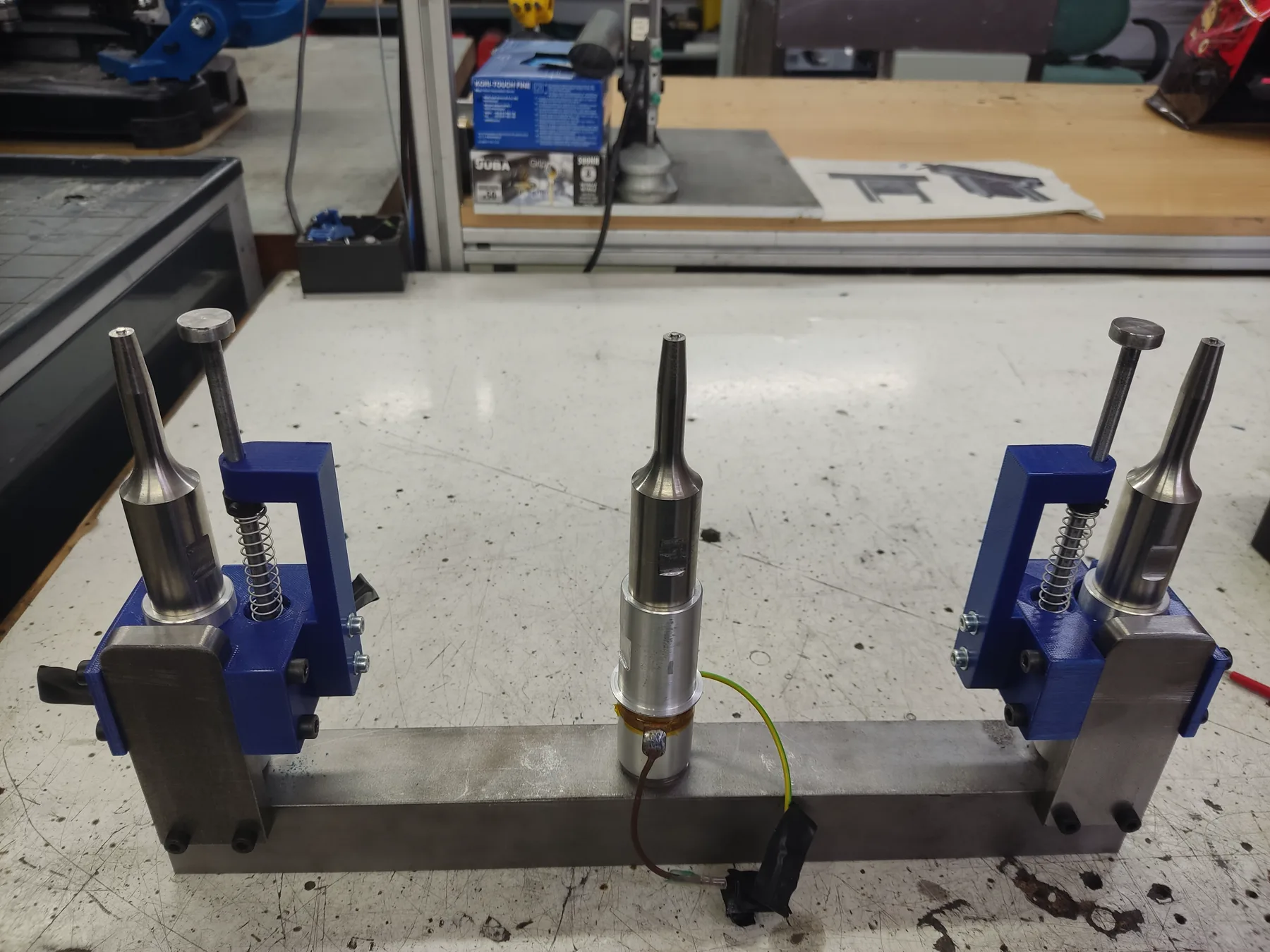
The standard hold-down secures the layers before welding and helps release them as the head rises. The extraction variant incorporates a chamber, suction and drainage beside the sonotrode.
 Enlarge ↗
 Enlarge ↗
 Enlarge ↗
 Enlarge ↗
The extraction configuration is shown as a development undergoing validation, not as certified performance.
Result
According to the operating experience recorded for this case, the workflow went from requiring approximately six or seven people to two. This is an estimate of observed operation, not a measured productivity study.
The recorded operating experience indicates that carbon residue stopped being a cause of waste and that breakages attributed to the raised marks from the previous welding method ceased. These observations relate to the documented process.
ALZA+ brings together mechanical design, manufacturing, electrics, programming, ergonomics and continuous improvement. It is a bespoke project: any new application requires its own assessment.
Articles
A closer look at the decisions behind this solution.
The usual mistake is not automating too late. It is automating the wrong action.
Read the articleYour next step
We can assess a solution tailored to your machine or process.